
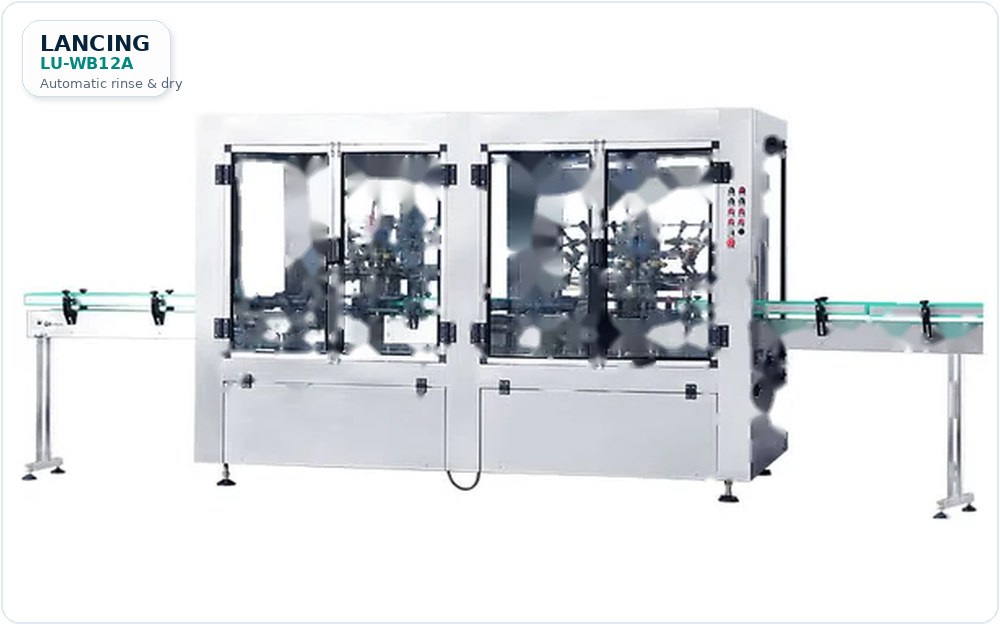
 Automatic
Automatic bottle rinsers
Inline machines for higher-output bottle preparation before filling, capping or labelling.
Explore automatic bottle rinsers →A bottle rinser prepares empty containers before filling. Compare air rinsing, water washing and any drying stage against the contamination to be removed, the bottle format, available utilities and the next machine; agree the required result using representative bottles before choosing a configuration.
Most successful projects start by matching the rinser style to the container, contamination risk, available utilities and the equipment immediately downstream.
Automatic
Inline machines for higher-output bottle preparation before filling, capping or labelling.
Explore automatic bottle rinsers →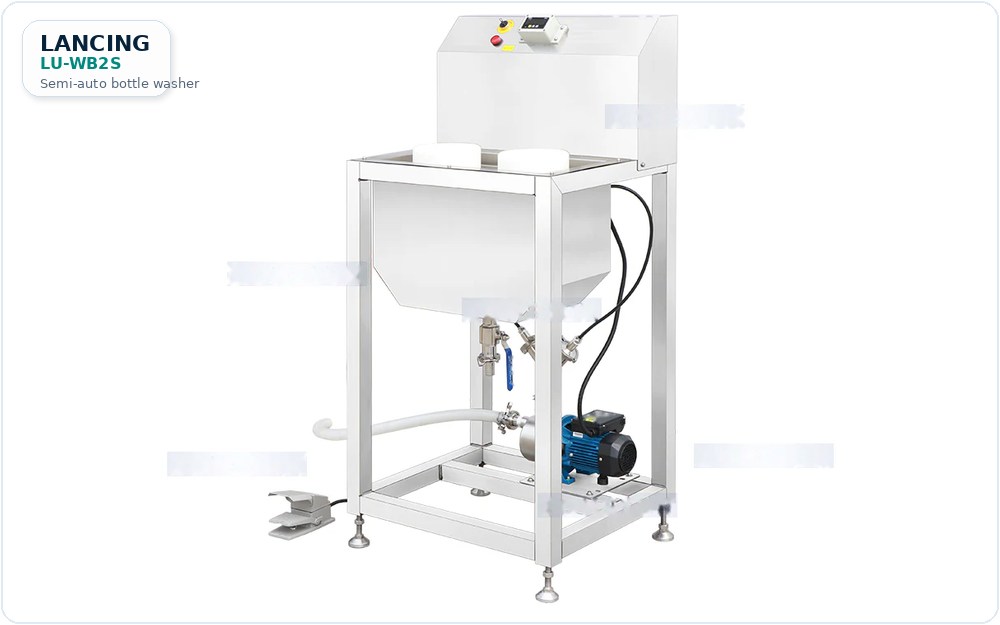 Semi-auto
Operator-fed and compact routes for smaller batches, flexible formats and lower capital projects.
Explore semi-automatic bottle rinsers →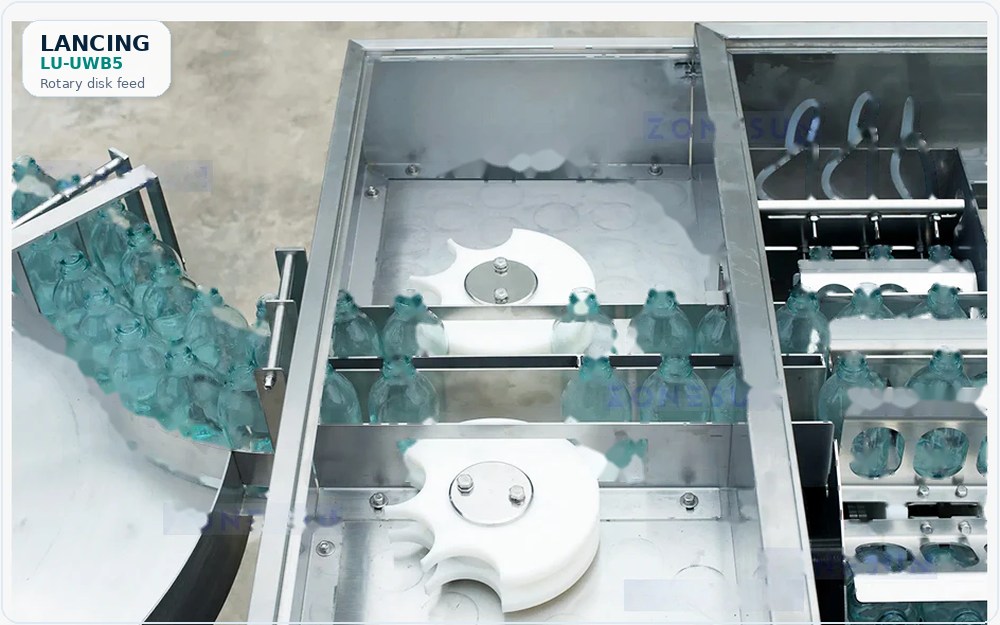 Rotary
Rotary indexing and multi-head rinsing routes for stable presentation and repeatable bottle handling.
Explore rotary bottle rinsers →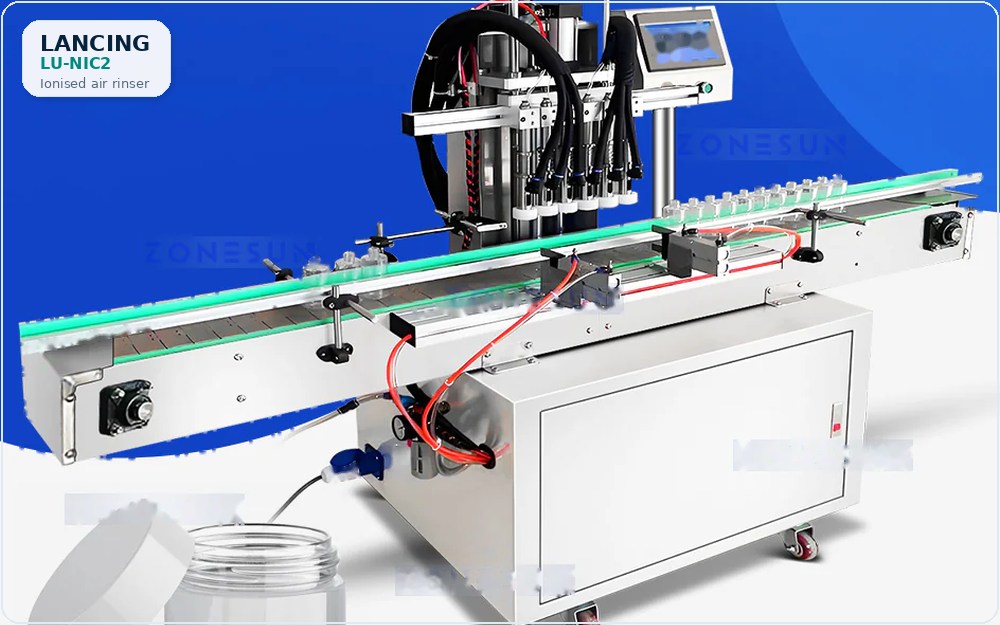 Air rinse
Waterless bottle cleaning for dust, light debris and dry container preparation before filling.
Explore air rinsing machines →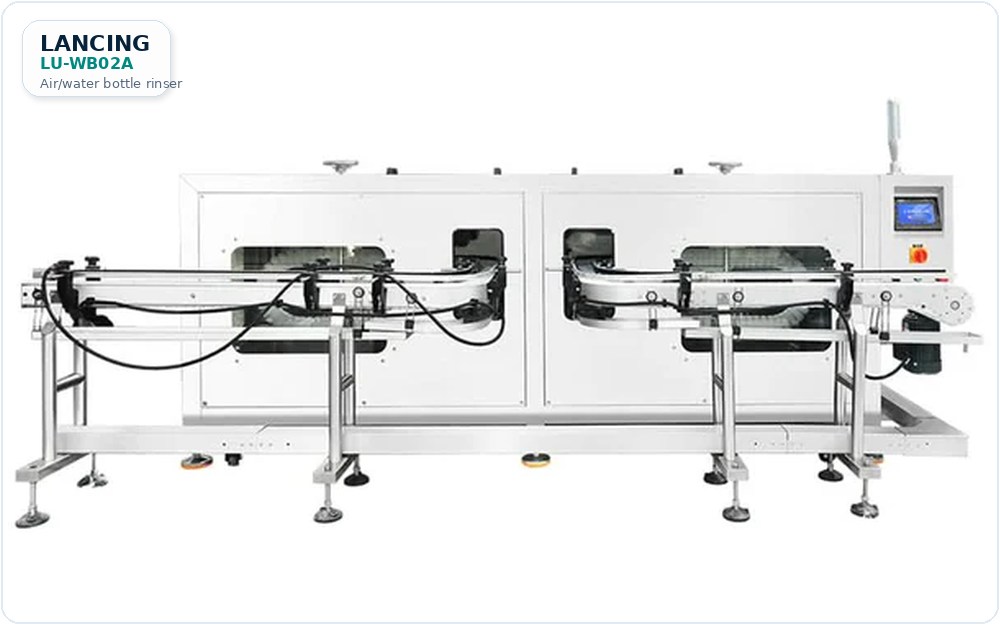 Water rinse
Internal or external bottle washing where water rinsing is required before production.
Explore water bottle rinsers →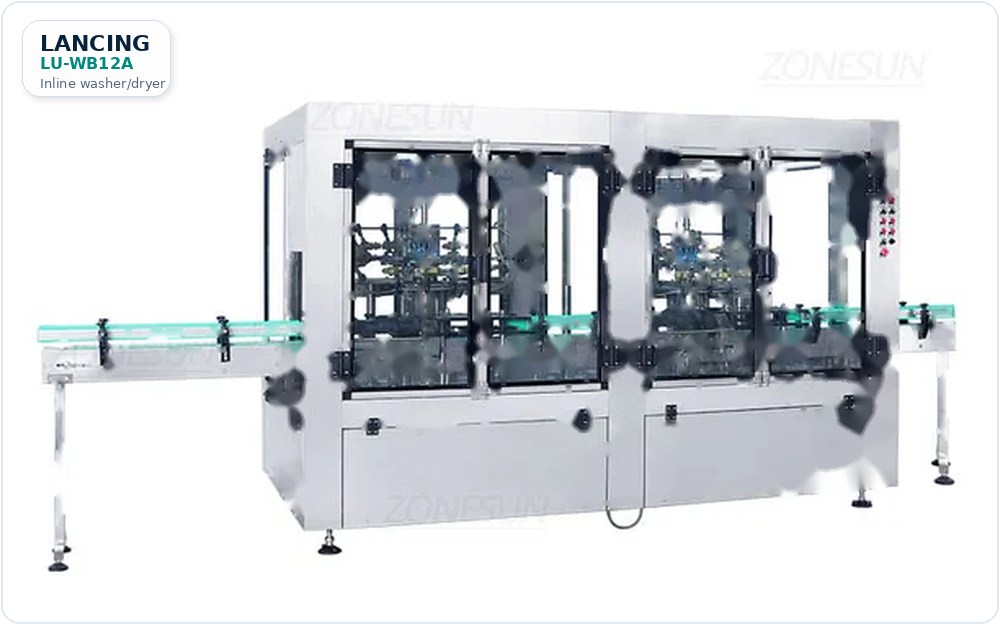 Rinse & dry
Combined washing, draining and clean-air drying for containers that must be dry before fill or label application.
Explore rinser dryer systems →Bottle Rinsers UK is designed for buyers who already know the next production problem: bottles need to arrive at the filler clean, stable, correctly presented and ready for filling. The site separates the main routes — air rinsing, water rinsing, bottle washing, rotary washing and rinse-dry systems — so the enquiry can move quickly from general research to a practical shortlist.
Good bottle rinsing selection is not only about the washing head. The bottle material, neck opening, bottle stability, rinse medium, compressed-air quality, drain route, line speed and transfer into the filler all affect whether the final installation runs smoothly. Machine pages compare the equipment families, application pages cover bottle and industry requirements, and the guides help you prepare the information needed for a useful quote.
Use this comparison as a starting point. The final machine should be confirmed against real bottle samples, line speed and site utilities.
| Rinser type | Best fit | Key checks |
|---|---|---|
| Automatic inline bottle rinser | Higher-output lines with conveyor transfer | Bottle stability, line speed, water/air services, guarding and downstream buffering |
| Semi-automatic bottle rinser | Start-ups, short runs and frequent format changes | Operator loading method, changeover time, bottle handling and achievable batch speed |
| Rotary bottle washer | Controlled indexing and repeatable rinse positions | Head count, bottle diameter range, loading access, cleaning method and drainage |
| Air rinser | Dry bottles where dust or light debris must be removed | Compressed-air quality, ionised air requirement, extraction and bottle inversion |
| Water wash and dry system | Containers that require a wet rinse and dry internal finish | Water quality, drying air, dwell time, drain design and hygiene expectations |
Choose an application route by bottle type, product category or the line problem you need to solve.
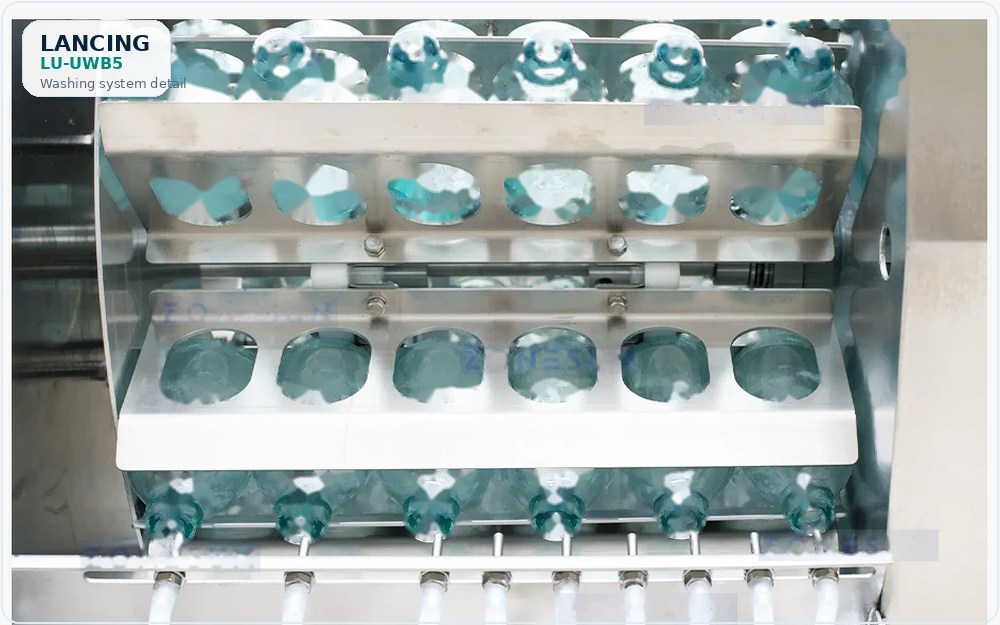 Application
Bottle rinsing and washing routes for glass bottles used in drinks, oils, spirits, sauces and premium products.
Explore glass bottle rinsers →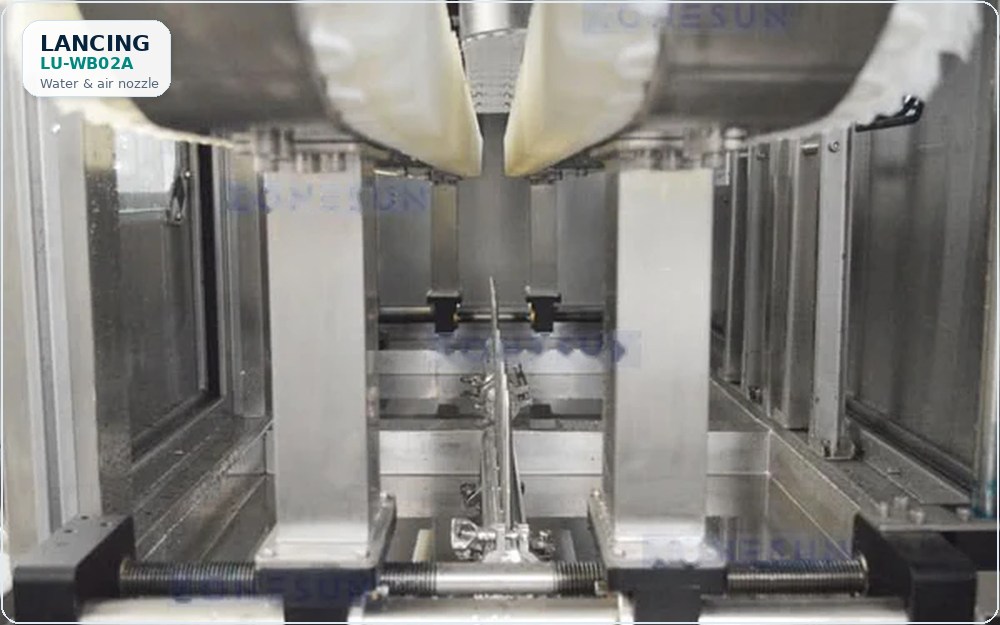 Application
Bottle preparation for PET, HDPE and lightweight plastic bottles where stability and transfer are critical.
Explore PET and plastic bottle rinsers →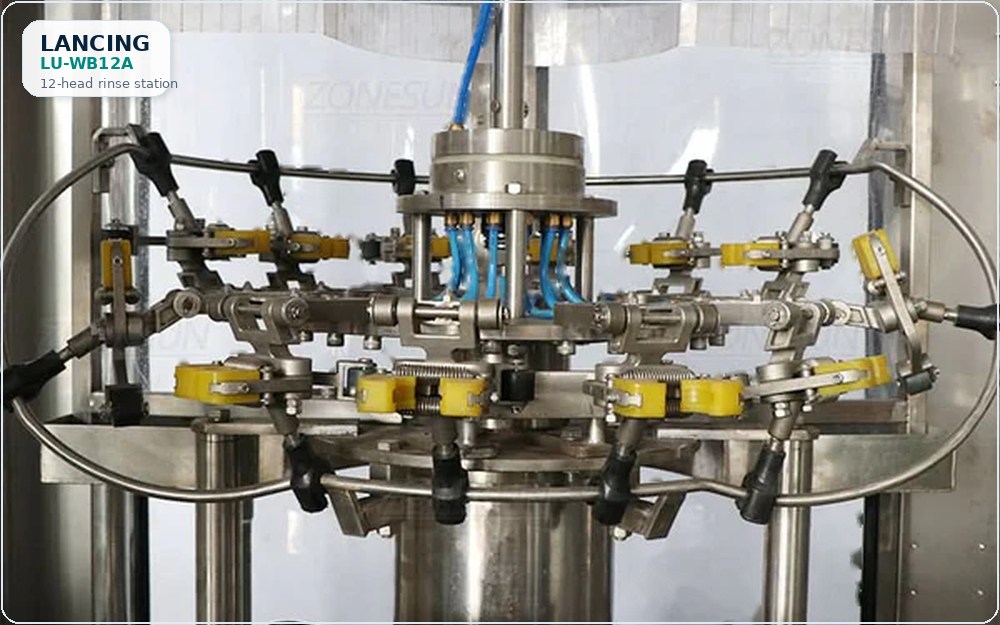 Industry
Bottle rinsing machinery for beverage, sauce, edible oil and food production lines.
Explore food and beverage bottle rinsers → Industry
Container rinsing for shampoos, lotions, skincare, pump bottles and premium presentation-led packs.
Explore cosmetics and personal care → Industry
Bottle rinser routes for detergents, cleaners, automotive fluids and household liquids.
Explore chemical and household bottles → Service
Support for conveyor interfaces, utilities, handover, commissioning and line readiness.
Explore installation and integration →Review chemical-bottle rinsing decisions The application guide covers container handling, residual-liquid acceptance and wet-process containment.
Use these guides to prepare the technical information needed for a useful machinery quote.
A bottle rinser removes dust, debris, loose particles or rinse residues from containers before filling. The correct system depends on the bottle material, cleanliness requirement and whether the line needs air rinsing, water washing or drying.
Air rinsing is normally considered where the container must stay dry and the contamination is light. Water rinsing or bottle washing is considered where the container needs a wet wash, internal rinse or external clean before production.
Yes. A rinser can often be installed as an upstream machine before filling, provided the conveyor height, transfer points, speed, utilities and safety guarding are checked properly.
Bottle dimensions, material, neck finish, required rinse method, target speed, available utilities and the existing line layout are the most useful details for a realistic quote.
Often yes, but the practical range depends on bottle height, diameter, shape, neck opening, stability and the change parts or adjustments required between formats.
The site is built around UK specification, supply, installation and line integration support through Lancing Ltd.
Send the bottle details, rinse requirement and output target. We will help turn it into a practical shortlist.
For bottle rinsing projects, the strongest specification usually starts with the contamination risk rather than the machine name. Light dust in new empty bottles, visible loose particles, rinse-water residue, static attraction, residual moisture and bottle instability all point to different equipment choices. A dry air bottle rinser, an ionised-air route, a water bottle rinser or a rinse-and-dry system should be selected around the evidence from the actual bottle and the surrounding filling line.
Before quotation, Lancing should be given bottle samples or drawings, the required output, the upstream feed method, the downstream filler interface and the available utilities. This lets the shortlist cover nozzle access, inversion, water quality, air filtration, drainage and bottle handling without relying on unsupported assumptions. Where a project becomes a full wash, returnable-bottle or de-labelling project, use the dedicated Bottle Washers UK guide for the appropriate machinery route.
| Check | How to validate it | Why it affects specification |
|---|---|---|
| Particulate removal | Compare sample bottles before and after the proposed rinse under agreed inspection conditions. | Confirms whether air, ionised air, water rinse or a combined route is appropriate. |
| Filtered or ionised air | Confirm the air supply quality, nozzle position, extraction need and whether static attraction is part of the problem. | Prevents a dry rinser being specified for contamination that needs water or longer contact time. |
| Water quality and drainage | Check supply water, rinse-water contact, drain route and whether the next process can tolerate residual moisture. | Separates water-rinse projects from rinse-and-dry or full bottle-washing projects. |
| Line integration | Confirm conveyor height, transfer points, guarding envelope, buffer space and filler speed. | Avoids selecting a rinser that works as a machine but fails as part of the line. |
Use representative bottle samples and inspect the container before and after rinsing under agreed lighting or magnification. For higher-risk projects, define the acceptance check before the trial rather than relying on a general description of “clean”.
The most useful details are available water, drainage, compressed-air quality, electrical supply, conveyor height, footprint and the output target. These decide whether air rinsing, water rinsing or rinse-dry handling is realistic.
Use a pre-fill rinse for a defined container-preparation duty. If the project involves heavy washing, returnable bottles or label removal, assess the full washing process separately; the specialist Bottle Washers UK route provides further guidance.
The strongest enquiries define the contamination risk, bottle-handling challenge, utility boundary and acceptance evidence before a machine route is fixed. Use the technical guides below to prepare those decisions.
Separate loose particles, static-held debris, wet-rinse duty and full washing so the trial addresses the real problem.
Build the risk brief →Plan how released particles leave the bottle and are kept away from open containers.
Review the air path →Define bottle detection, utility permissives, fault recovery and upstream/downstream handshakes.
Prepare the controls brief →Choose a repeatable inspection and reject route that matches the bottle and contamination risk.
Plan acceptance evidence →Follow water from the supply through rinse delivery, bottle drainage and the site wastewater boundary.
Review site services →Define the acceptable bottle condition at filling, capping, coding or labelling and prove it at line speed.
Set the moisture check →These answers address decisions that are easy to miss when the project is described only by bottle size and headline speed.
The required bottle condition at the next process should be defined before any machine is shortlisted. Identify the likely contamination, whether the bottle may be wetted, what counts as acceptable after rinsing and whether the next operation is filling, capping, coding or labelling.
Only then should the project compare handling method, output, utilities and automation level. This avoids choosing a technically impressive machine that cannot deliver the condition the downstream process actually needs.
Representative samples reveal handling behaviour that a dimension sheet cannot show, including wall stiffness, base stability, static attraction, neck geometry, mould variation and how the empty bottle reacts to air, water and speed changes.
Samples should come from the normal supply route where possible. Bottles taken directly from a clean carton may behave differently from containers that have been depalletised, unscrambled, conveyed or stored in the production environment.
A bottle rinser should normally be positioned so that the cleaned, open container has a short and controlled path to the filler, while still allowing safe guarding, access, drainage and enough accumulation for stable line operation.
There is no universal distance. The correct layout depends on conveyor height, stop-start behaviour, inspection, reject handling and the risk of bottles being exposed to dust, splashes or operator contact after rinsing.
The trial should begin with identified samples, a defined incoming condition, an agreed inspection method and a written pass/fail rule. Machine settings, utilities, cycle timing and the bottle condition at the downstream handover should also be recorded.
Agreeing the evidence first prevents a trial being judged only by appearance or by an undefined statement that a bottle “looks clean”. A useful trial should be repeatable and suitable for later quotation, FAT or procurement review.
Send representative samples, target output, utilities and the required downstream bottle condition for a practical shortlist.
Lancing's current bottle-rinsing range provides two useful first-party reference points. The LU-WB12 automatic bottle washer is published with 12 nozzles, output of about 2,800 bottles per hour, 110/220 V supply and 0.75 kW power. A separate LU-WB32 rotary semi-automatic route is published with 32 heads, output up to 2,500 bottles per hour and reference water use of about 1 m³/h. These figures apply to the published configurations and must be reconfirmed for the actual bottle, rinse duty, operator method, utilities and connected line.
The fastest route to a defensible quotation is to separate verified machine data from project variables. Bottle neck finish, internal shoulder geometry, rinse-medium condition, nozzle registration, drain time, line stops, change parts and the downstream handover can all change the accepted result even when the basic machine family remains the same.
For the source machine information, see the Lancing bottle-rinsing range. Final suitability remains subject to the actual project specification and trial evidence.
These guides turn general terms such as “clean”, “filtered”, “compatible” and “automatic” into evidence that can be tested and recorded.
Prove where air or water reaches the bottle and distinguish coverage from the final cleaning result.
Define air and water condition where the utility enters the rinser, including monitoring and change records.
Check format parts, nozzles, utilities, guards, settings and first-off bottles before production release.
Define the status of bottles caught inside the machine after a blockage, utility loss or safety stop.
Use drawings and samples to prove how each bottle is supported, inverted and released without damage.
These guides address process purpose, line architecture and the evidence needed after a change.
Separate particulate or liquid rinsing from gas purging before filling.
Compare modular retrofit flexibility with integrated rinser-filler-capper transfer.
Define proportionate evidence after format, utility, control or maintenance changes.
The useful distinction is the work to be done to the bottle. A pre-fill rinser handles a defined preparation duty; a washing requirement may involve a broader process. Specify the incoming condition and the result needed at filling before choosing equipment from either name.
Describe how the empty bottles arrive and travel to the line. Photograph or identify the material to remove rather than using “dust” for every defect. Where wetting is undesirable, assess the dry-rinse route with the real bottle opening, interior geometry and method of removing released particles. Confirm the condition after transfer to the filler as well as immediately after rinsing.
Where the duty requires a wet rinse, define the rinse medium and the permitted condition afterwards. A bottle that drains easily in a hand trial may retain liquid during the proposed machine cycle. Include bottle orientation, shoulders, neck finish and the time available to drain or dry before filling.
List those duties explicitly. Do not assume a machine intended to prepare new empty bottles can also remove labels or unknown residues. The cleaning process and acceptance method need their own assessment, including incoming variability and any effect on the bottle.
Agree an identified bottle sample set, incoming condition, inspection method and pass/fail rule. Compare the same bottles through the proposed handling and downstream transfer, including stops and restarts. Rinsing should not be described as sterilisation without a separately established and validated process.
The washer-versus-rinser guide sets out the equipment comparison; use post-rinse bottle inspection to plan the acceptance decision.
Related guidance:
The most useful rinse specification describes the bottle at the point where filling begins. Define which contamination the preparation stage is intended to remove, whether moisture is acceptable and how bottles reach the filler after treatment. This keeps a choice between air, water and rinse-dry routes tied to the production outcome rather than the name of the machine.
Make the trial samples traceable to the containers used in production. Identify the material, supplier, neck finish and storage condition, and include each format that changes the handling task. A bottle that is easy to grip can still need a different nozzle arrangement or draining position. Record handling and cleaning observations separately so the reason for a proposed change remains clear.
Agree the boundary of the rinse project with the team responsible for the finished product. The machine supplier can assess equipment behaviour, while the production team needs to define the required cleanliness evidence and acceptance method. A rinse should not be described as sterilisation or a guaranteed hygiene outcome unless that specific process has been assessed and supported.
The quotation should identify the bottle formats, treatment route, handling equipment, utility requirements and acceptance checks included in the proposed scope.
No. Describe the intended particle-removal task accurately and agree any separate hygiene or validation requirement with the responsible production team.