
 Machine
Automatic bottle rinsers
Compare automatic routes for higher-output lines.
Explore route →Compare bottle rinser routes by container, cleaning target, output, utilities and line fit.
Measure bottle height, body diameter, base shape, neck opening and material. A stable round glass bottle and a lightweight shaped PET bottle may need very different handling even when the cleaning requirement looks similar.
Ask whether the bottle can be inverted, gripped or indexed safely. Check whether the bottle scuffs easily or holds dust because of static.
Decide whether the real problem is dust, loose particles, storage debris, water-soluble residue, external marks or a process requirement for wet washing. Air rinsing, water rinsing and bottle washing solve different problems.
A bottle rinser prepares a container for the next production step using an agreed rinse duty. A bottle-washing requirement may include a more involved cleaning process. Equipment names overlap, so define what must be removed, whether the bottle can be wetted and the condition needed at filling before comparing proposals.
For new containers with loose particles, assess dry air rinsing or a suitable wet-rinse route against representative bottles. For returnable bottles, labels or adhered residues, specify those duties separately and have the required cleaning process assessed. A machine that prepares new bottles must not be assumed to clean every type of returned container.
Record the sample identity, incoming contamination, machine settings, rinse medium and inspection conditions. Use an agreed pass/fail rule and retain representative results. General rinsing should not be presented as sterilisation; any microbial or other specialist process objective needs its own specification and validation.
Continue with air-rinsing machinery for dry preparation, water bottle rinsers for wet-rinse duties and empty-bottle inspection for the acceptance decision.
Semi-automatic rinsing may suit short runs and frequent changeovers. Automatic rinsing is more appropriate where the preparation stage must keep pace with a filler and reduce manual intervention.
Air rinsers depend on compressed air quality and flow. Water rinsers depend on water supply, pressure and drainage. Rinse-dry systems also need enough clean air and dwell time to achieve the required dryness.
The rinser should match the filler, capper, labeller and conveyors. Poor transfer points or speed mismatch create downtime even when the rinser itself is correctly specified.
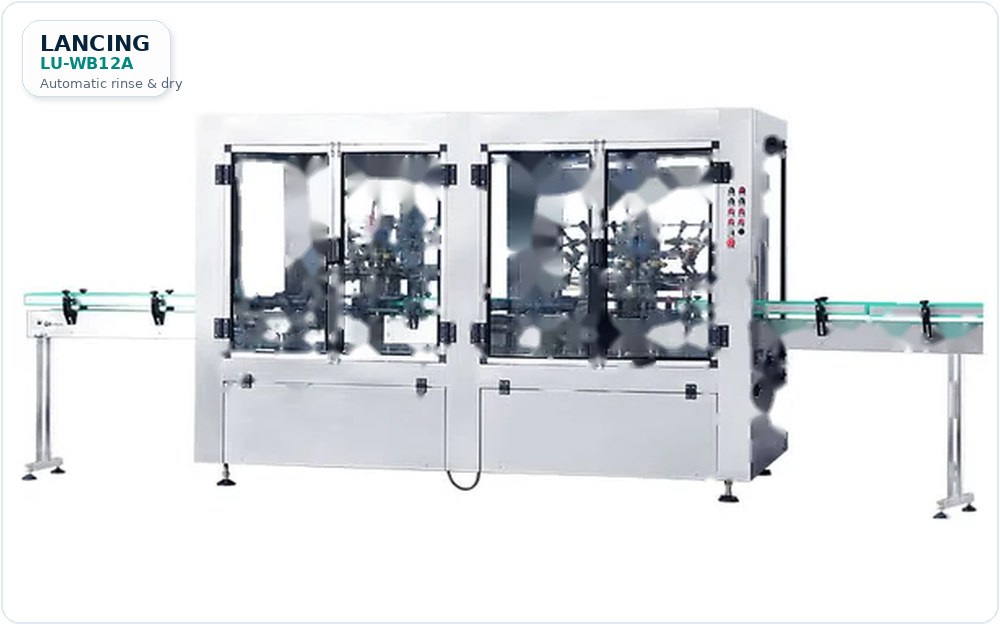
Machine
Compare automatic routes for higher-output lines.
Explore route →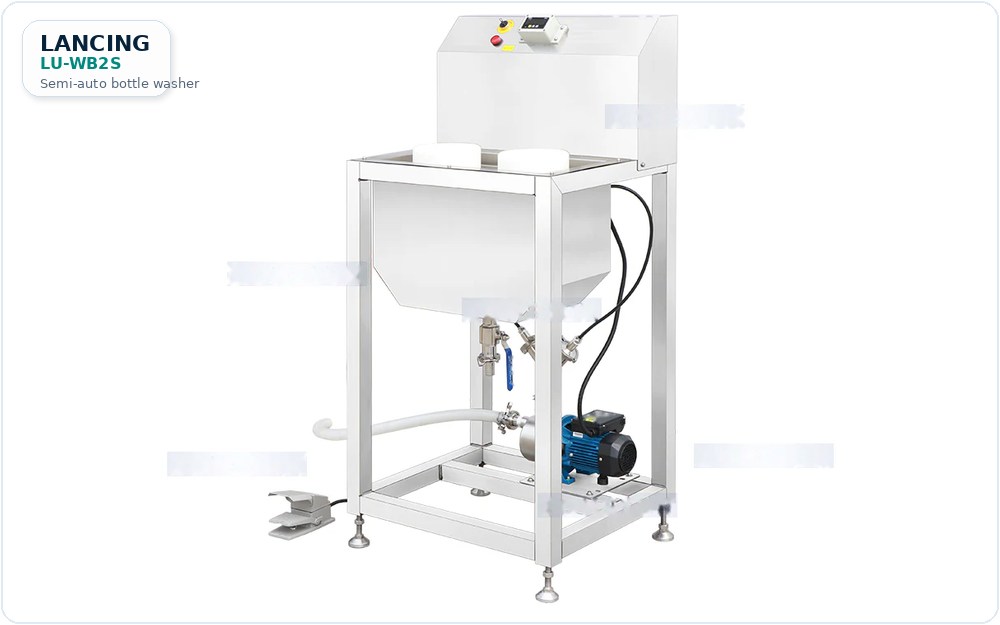 Machine
Compare flexible routes for smaller batches.
Explore route →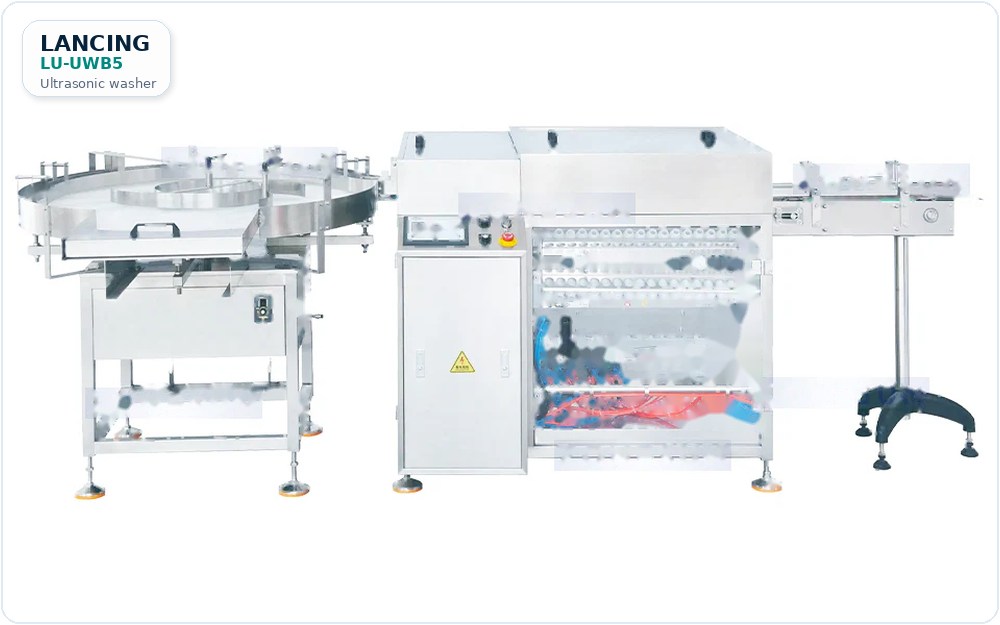 Service
Plan the rinser around conveyors, fillers and cappers.
Explore route →Start with the bottle dimensions, material, neck opening and stability because these determine which handling and rinsing routes are realistic.
Neither is automatically better. Air rinsing keeps bottles dry and targets light debris, while water rinsing is used where a wet wash is needed.
Choose based on throughput, labour, space, budget and format changes. Semi-automatic is flexible; automatic is better for sustained line speed.
A practical bottle-rinser choice needs four inputs: the contamination to remove, the container format, the utility services and the process immediately after rinsing. Define what a pass looks like before comparing air, water, rotary or rinse-dry machines.
| Check | How to validate it | Why it affects specification |
|---|---|---|
| Contamination | Describe whether the issue is dust, loose particles, residue, water carry-over or packaging debris. | Controls whether air, water or washing is appropriate. |
| Container | Measure height, diameter, neck opening, material, base stability and shape. | Controls handling and nozzle access. |
| Utilities | Confirm air, water, drainage, power, footprint and extraction if required. | Prevents selecting an installation the site cannot support. |
| Acceptance check | Agree inspection method and sampling before trial. | Turns a generic demonstration into useful evidence. |
A useful selection record states the bottle formats, contamination assumption, utilities, chosen rinse principle, handling method, downstream condition and tests that will prove acceptance. It also records what the machine is not intended to do. This boundary is especially important where a simple pre-fill rinse could be confused with heavy washing, label removal or returnable-bottle restoration.
Include the least stable, smallest-neck and slowest-draining bottles in the record. If the process changes after order, the same record makes it clear which assumptions need to be retested.
A practical shortlist connects the removal requirement to the bottle, the operating method and the condition needed at the next process.
Selection should begin with the contamination and required outgoing bottle condition, then confirm which handling and automation route can achieve that result at the target output. Starting with speed can lead to a fast machine using an unsuitable cleaning method.
Define what must be removed, whether moisture is acceptable and how the result will be checked before comparing capacities.
The minimum useful brief includes representative bottle samples or drawings, bottle material and dimensions, the observed contamination, the required acceptance condition, target sustained output, available utilities and the intended position in the line.
Also identify every planned format. Missing a lightweight, shaped or small-neck bottle can change the proposed handling method and tooling.
Frequent changes increase the importance of tool count, adjustment access, recipe control, setting references, cleaning, tooling storage and the time needed to release the next format. A highly automatic machine may still be inefficient if changeover is complex for short campaigns.
Compare productive batch time and verified changeover work, not only the maximum running speed.
Compare both routes when the contamination might be removed by air but the evidence is uncertain, or when water could improve removal but residual moisture would create a downstream risk. The same bottle and acceptance method should be used for both trials.
This makes the trade-off between removal, utilities, drainage, drying and line integration visible before the machine family is fixed.
The most commonly overlooked requirement is the bottle condition at the actual filler, coder or labeller rather than at the rinser exit. Transfer time, line stops, water migration, static and open exposure can change the bottle after treatment.
Include the downstream handover in the trial and acceptance plan, and review post-rinse recontamination controls.
Send the bottle formats, contamination, acceptance method, output and line layout for a route comparison grounded in the real application.
Compare neck finish, height, diameter and stability across all bottle formats. The selected rinsing method, handling parts and changeover procedure should suit the actual container and process. Record the adjustments and checks required for each format so a change of bottle does not leave an untested handling arrangement.
Related guidance: rinsing versus washing and sterilising · post-rinse recontamination controls