
 Route
Route
Rotary bottle rinsers
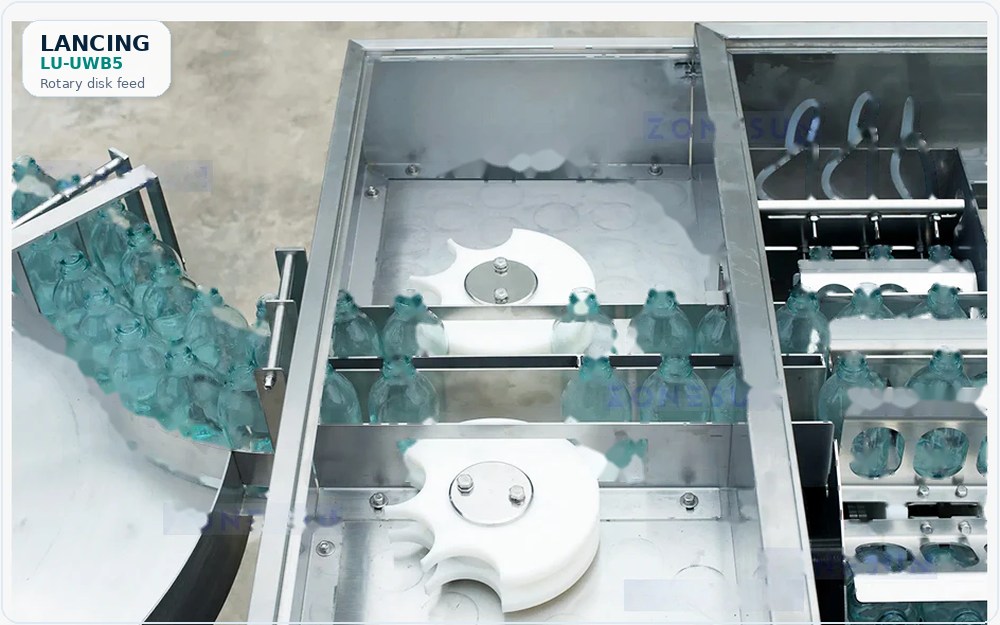
Controlled indexing can be useful for stable glass bottle presentation.
Explore route →Bottle rinsing and washing machinery for glass containers where presentation, cleanliness and stable transfer are critical.
Glass bottles are often used for beverages, spirits, oils, sauces and premium products. They may be strong enough for firm handling, but they still need careful control around impact, neck finish, base stability and transfer from machine to machine.
The correct rinser may be an air rinser for dry dust removal, a water washer for internal cleaning, a rotary washer for compact preparation or a rinse-dry system where residual water is not acceptable.
Route
Controlled indexing can be useful for stable glass bottle presentation.
Explore route → Route
Route
Consider wet internal or external washing for glass bottles that need a stronger clean.
Explore route →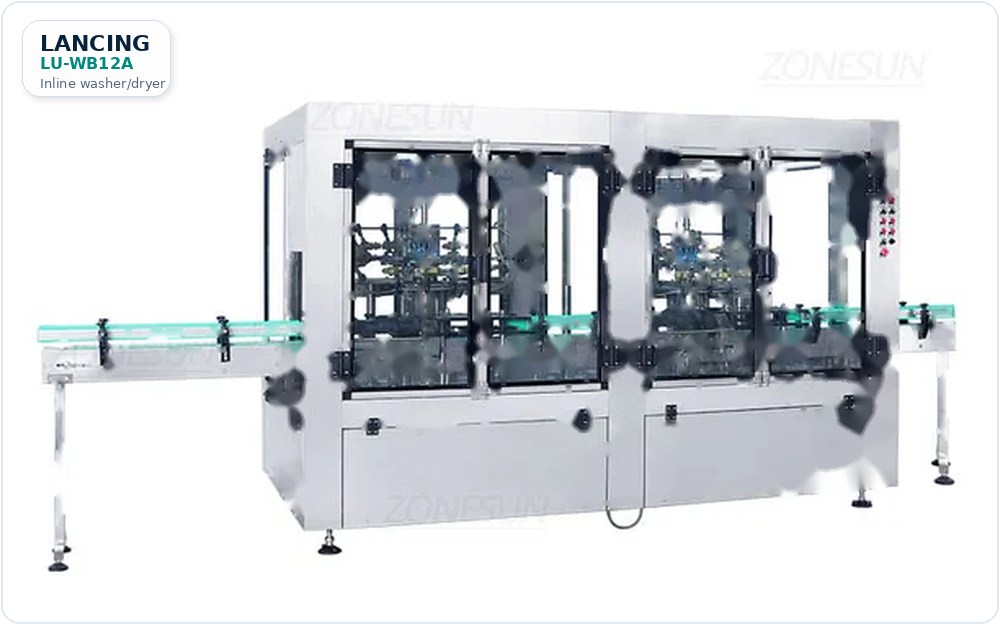 Route
Route
Useful when wet-rinsed glass bottles must be dry before filling or labelling.
Explore route →For application-led projects, the correct rinser depends on how the bottle arrives, how it is filled and how quickly it must move to capping, labelling or packing.
| Rinser type | Best fit | Key checks |
|---|---|---|
| Automatic inline bottle rinser | Higher-output lines with conveyor transfer | Bottle stability, line speed, water/air services, guarding and downstream buffering |
| Semi-automatic bottle rinser | Start-ups, short runs and frequent format changes | Operator loading method, changeover time, bottle handling and achievable batch speed |
| Rotary bottle washer | Controlled indexing and repeatable rinse positions | Head count, bottle diameter range, loading access, cleaning method and drainage |
| Air rinser | Dry bottles where dust or light debris must be removed | Compressed-air quality, ionised air requirement, extraction and bottle inversion |
| Water wash and dry system | Containers that require a wet rinse and dry internal finish | Water quality, drying air, dwell time, drain design and hygiene expectations |
Yes, if the requirement is dry dust or loose-particle removal. Water washing is considered where a wet rinse or stronger clean is needed.
The best route depends on speed, cleanliness target and space. Rotary, inline water and air rinsing routes can all be relevant.
Often yes. Format parts or adjustments may be needed for different bottle heights, diameters or neck openings.
Glass bottles are usually stable enough for conveyor handling, but neck opening, shoulder shape and residual water retention still need to be checked. For spirits, sauces, oils and premium presentation bottles, agree whether the purpose is dust removal, water rinsing, external finish or rinse-dry preparation before selecting equipment.
| Check | How to validate it | Why it affects specification |
|---|---|---|
| Neck and shoulder shape | Check nozzle access and drainage around shoulders. | Prevents missed internal rinse or retained water. |
| Presentation finish | Inspect glass clarity after rinsing and before filling or labelling. | Useful for premium products where visible particles are unacceptable. |
| Format range | List all bottle heights and diameters. | Identifies guides, change parts and rail settings. |
Plan validation checks · Arrange sample testing · Send project details
Glass bottles may arrive with loose dust, fibres or packaging debris, but the line must also control damage created by accumulation, guides, clamps, inversion and discharge transfer. The trial should distinguish incoming contamination from chips, scuffs or breakage introduced by handling.
Use representative bottle weights, neck finishes and base profiles. Record contact points and observe transitions during normal production, blocked discharge and restart. If a wet route is used, include the slowest-draining geometry and the condition required before filling, coding or labelling.
The contamination risk guide supports the challenge sample, the inspection guide defines the acceptance route, and the moisture guide covers wet-rinse handover.
Glass bottles are usually rigid, but variation, surface finish and contact points still influence the safest rinse and transfer method.
Glass height, body diameter, neck position, base shape and mould variation can change how a bottle sits in guides, pockets or clamps. Tooling should therefore be based on the stated tolerance range and confirmed with samples from normal production.
A holder that fits one presentation sample may be too tight or too loose across a full batch, particularly on tall or shaped bottles.
Check every glass contact point, the clearance through guides and starwheels, the transition between conveyors, clamping force, bottle-to-bottle spacing and stop-start behaviour. Look for both visible damage and repeatable marking.
The trial should include the heaviest and tallest formats and should record where any chip, scuff or impact occurred so the mechanism can be corrected.
Amber, green or opaque decoration can reduce contrast and make fine fibres, dust or droplets harder to see through the sidewall. Inspection may need controlled lighting, a suitable background and a defined viewing angle rather than ordinary room light.
Agree the method using the actual bottle colour before using visual inspection as a pass/fail criterion.
Premium bottles should be tested for marks on coatings, printing, embossing and label panels as well as for internal cleanliness. Guides, pockets and wetting should avoid damaging presentation surfaces or leaving an unacceptable external condition.
Send decorated production samples, not undecorated development bottles, when the finished appearance is part of the acceptance requirement.
Provide representative glass formats, decoration details, contamination evidence and the required output for a handling and rinse review.
Glass bottles are dimensionally rigid, but finish variation, mould seams, chips, shoulder geometry and bottle weight can still affect gripping and inversion. A dimensioned drawing should identify the mouth, finish outside diameter, support ring or bead where present, finish height, shoulder transition, body diameter and overall height. Samples should include normal manufacturing variation and any premium, miniature, long-neck or non-round format in the proposed range.
The trial should confirm that guides, holders, clamps or grippers do not damage the finish, mark decorated surfaces, collide with shoulders or obstruct the rinse path. Every position should release the bottle without impact or unstable transfer. Any broken or chipped sample needs to be investigated rather than treated as an isolated cosmetic issue.
| Glass-bottle check | Evidence to provide | Trial observation |
|---|---|---|
| Finish and mouth | Drawing plus representative samples | Secure support and clear nozzle access without chips or scuffing |
| Weight and centre of gravity | Lightest/heaviest formats and fill-line orientation | Stable loading, inversion, index and discharge |
| Decoration or premium finish | Applied decoration and protected areas | No guide or gripper marking at normal variation |
| Dimensional variation | Samples from normal production range | Repeatable registration without excessive adjustment |
Use the neck-finish and gripper compatibility guide to prepare the sample pack and the nozzle coverage guide to record internal reach.