
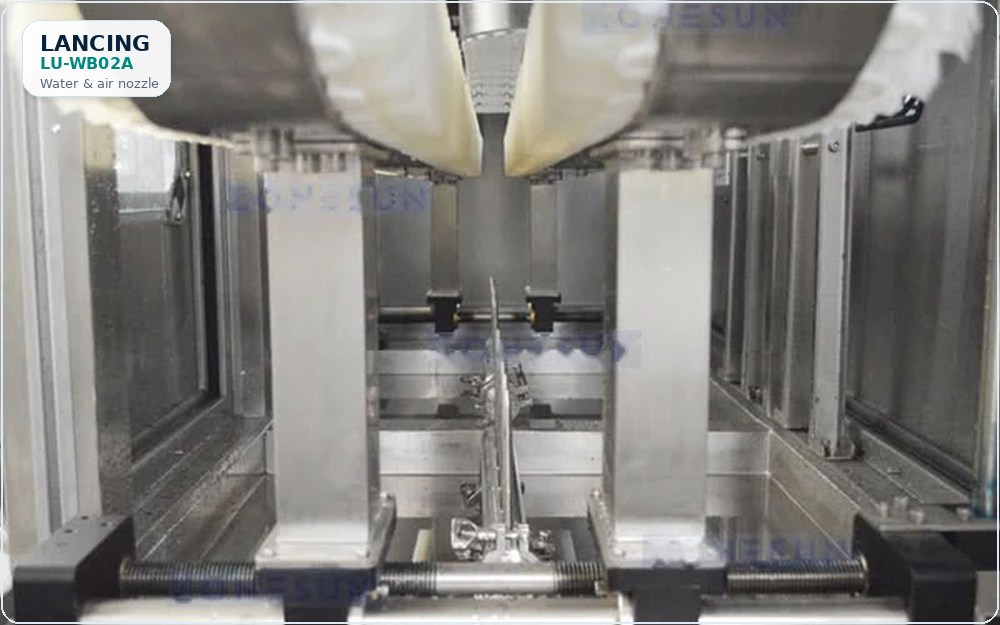
 Application
PET and plastic bottle rinsers
Plan handling for lightweight and shaped plastic bottles.
Explore route →Bottle rinsing machinery for detergents, cleaners, household liquids, automotive fluids and chemical-style products.
Bottles may be HDPE or PET, shaped for grip, fitted with triggers or caps, and filled with products that require controlled production conditions. The bottle rinsing stage should be chosen with material compatibility, operator safety, drainage, containment and downstream capping in mind.
Air rinsing may support dry container preparation, while water washing or wet-rinse systems may be needed where incoming containers require a stronger clean.
Application
Plan handling for lightweight and shaped plastic bottles.
Explore route →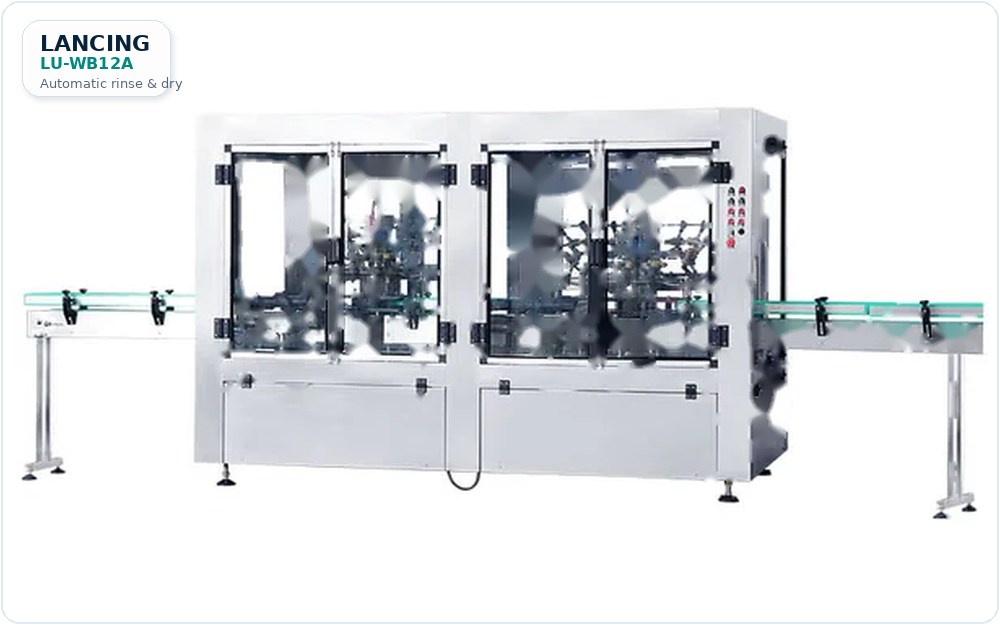 Route
For inline preparation before filling and capping.
Explore route →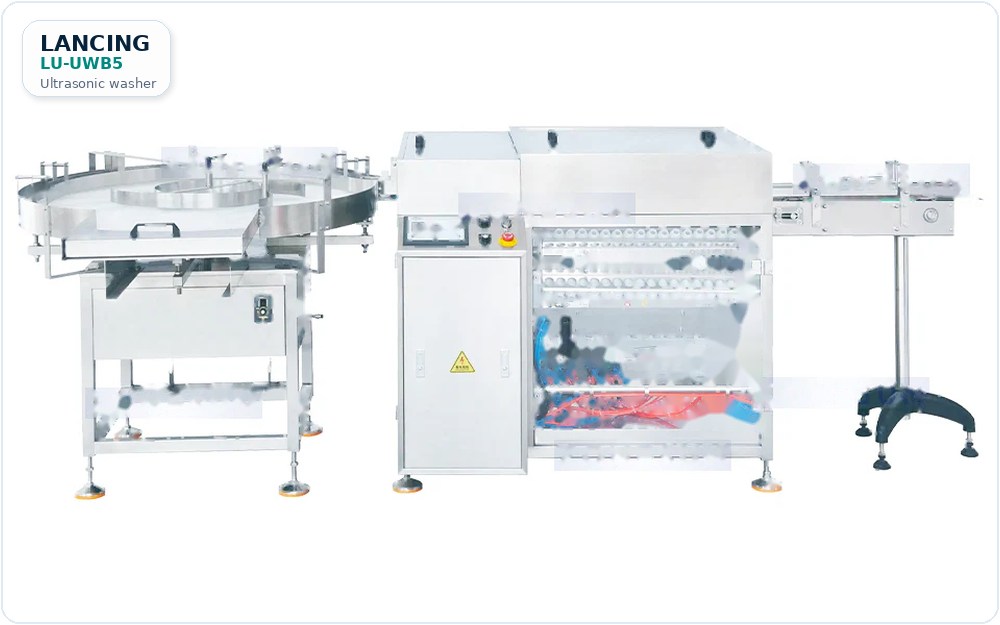 Service
Connect rinser, filler, capping and labelling equipment cleanly.
Explore route →For application-led projects, the correct rinser depends on how the bottle arrives, how it is filled and how quickly it must move to capping, labelling or packing.
| Rinser type | Best fit | Key checks |
|---|---|---|
| Automatic inline bottle rinser | Higher-output lines with conveyor transfer | Bottle stability, line speed, water/air services, guarding and downstream buffering |
| Semi-automatic bottle rinser | Start-ups, short runs and frequent format changes | Operator loading method, changeover time, bottle handling and achievable batch speed |
| Rotary bottle washer | Controlled indexing and repeatable rinse positions | Head count, bottle diameter range, loading access, cleaning method and drainage |
| Air rinser | Dry bottles where dust or light debris must be removed | Compressed-air quality, ionised air requirement, extraction and bottle inversion |
| Water wash and dry system | Containers that require a wet rinse and dry internal finish | Water quality, drying air, dwell time, drain design and hygiene expectations |
Yes. They can be used to prepare containers before filling detergents, cleaners and household liquids when the bottle condition requires it.
Check bottle material, product compatibility, rinse method, drainage, containment and integration with the filler and capper.
Yes, but the line should be planned so the rinser, filler, trigger capping machine and conveyors work together.
The rinser handles the container before filling. It does not establish the compatibility of the finished chemical product, clean the filler product circuit or replace the site's assessment of hazardous substances. First identify whether the incoming bottle contains loose dust, an adhered residue or moisture that must be removed.
For a dry preparation route, assess removal of the identified debris and its capture away from open bottles. For a wet route, define the liquid permitted to remain before filling. A visually drained bottle may still retain liquid at the shoulder, handle or base; decide how that residual amount will be assessed and whether it is acceptable for the formulation. Keep that decision separate from the machine's nominal output.
Use the lightest empty HDPE bottle, the smallest neck opening and any offset-neck or handled format. Observe where grippers and guides contact the container, whether it recovers its shape and whether it arrives at the filler upright. Damage or distortion may first become obvious during nozzle entry or closure application rather than in the rinse station.
Identify where removed contamination, splash and drainage go. Review cleaning access, containment and the permitted disposal route with the site team. Material compatibility applies to wetted components and seals as well as the bottle; the correct choice depends on the actual substances and cleaning method.
Observe bottles held between rinsing and filling during a downstream stop. Decide which containers can restart normally and which require inspection or reprocessing. Record loss of rinse supply, a blocked discharge and an interrupted inversion cycle as separate events, with the required response stated for each.
Use the existing acceptance checklist to document the agreed checks, or plan a representative sample trial. Supply the site's substance information and handling constraints when discussing the application.