
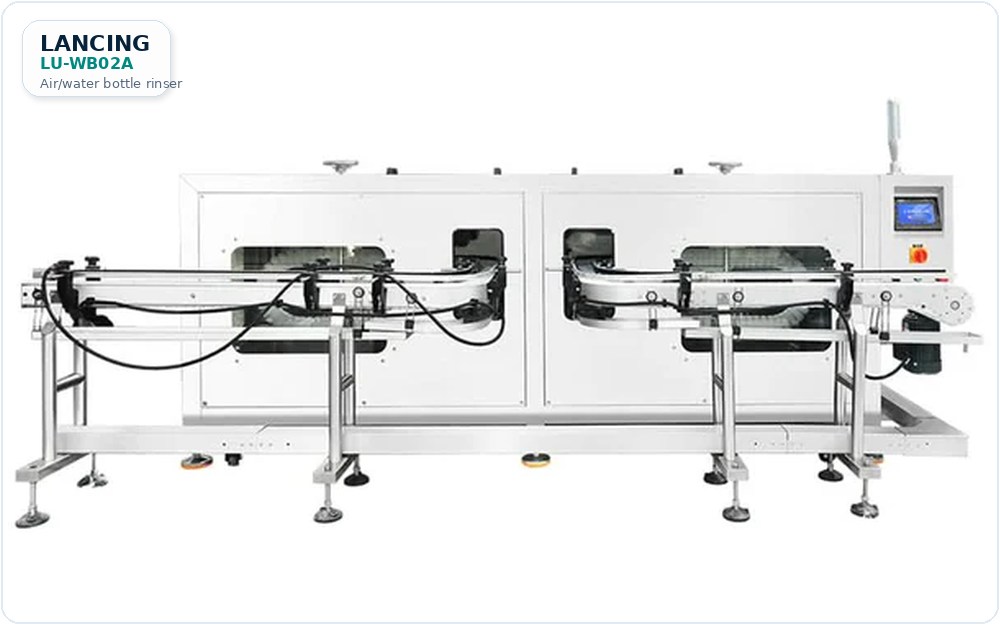
 Comparison
Air rinser vs water rinser
Compare dry air rinsing and wet bottle washing routes.
Explore route →Compare dry air rinsing and wet bottle washing before choosing a bottle rinsing machine.
Air rinsing suits bottles that should stay dry and mainly need loose dust or light debris removed. Ionised air may help where static attracts particles.
Water rinsing suits containers that need a wet internal rinse, visible wash step or more intensive cleaning before filling. Drainage and water quality become important.
If a bottle is wet after rinsing, the downstream filler, capper, labeller and coding system may be affected. Rinse-dry systems can be specified where dryness is required.
Start with the contamination type, bottle material, target output and utility availability, then shortlist the route that solves the problem with the least process risk.
Comparison
Compare dry air rinsing and wet bottle washing routes.
Explore route →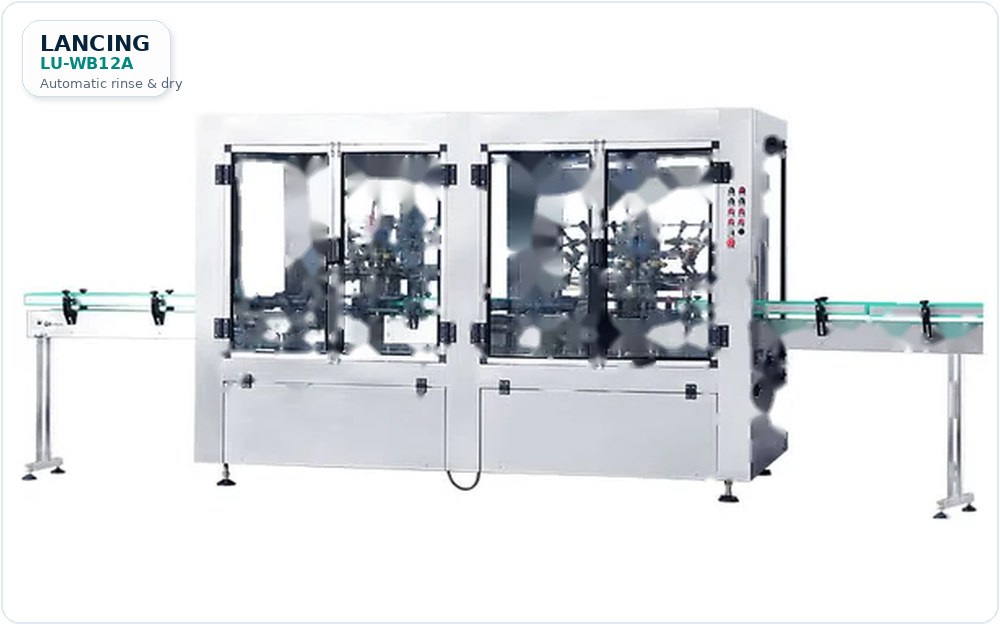 Machine
Inline routes for higher-output bottle preparation.
Explore route →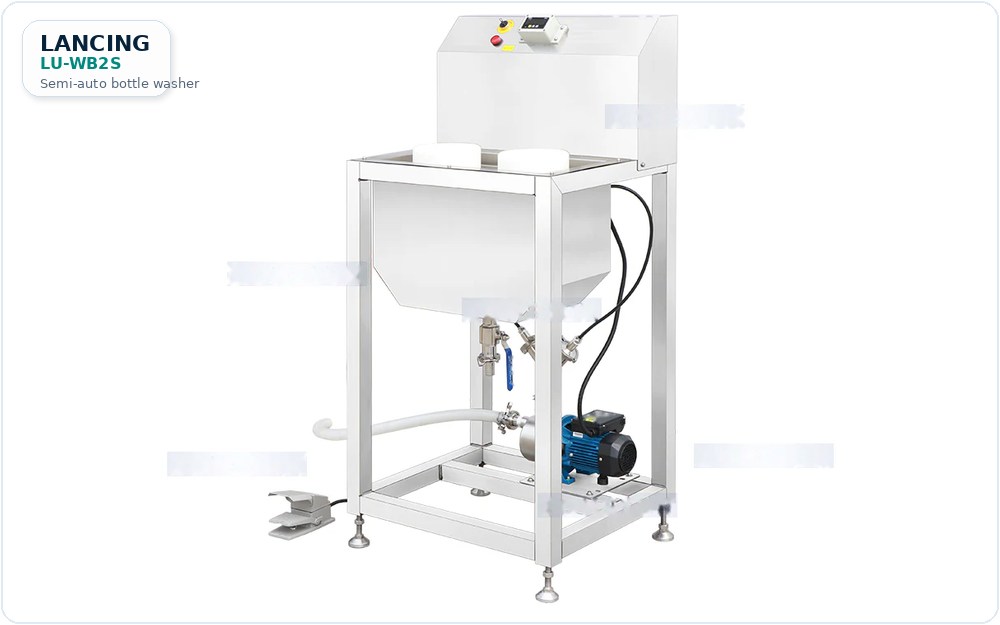 Machine
Compact and operator-fed routes for flexible production.
Explore route →It can be, but the true cost depends on output, bottle handling, compressed air capacity and whether ionised air or extraction is needed.
It depends on the contamination. Water rinsing can handle different residues, while air rinsing is mainly for dry debris and particles.
Drying is needed when residual water would affect filling, capping, labelling, coding or product quality.