
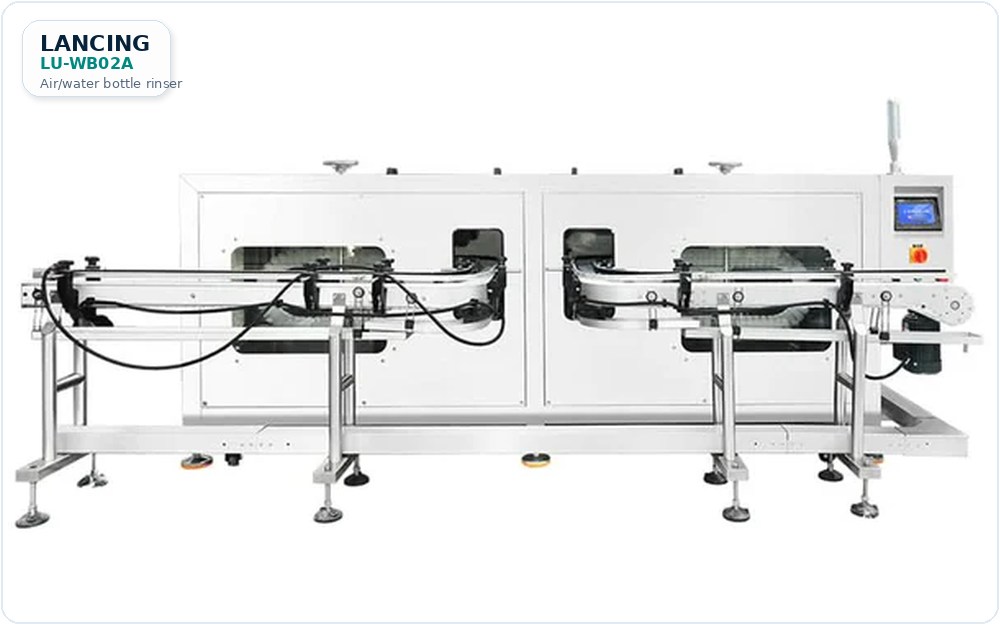
 Comparison
Air rinser vs water rinser
Compare dry air rinsing and wet bottle washing routes.
Explore route →Plan an inline rinser that keeps pace with your filler, capper and labeller without disrupting bottle flow.
An inline bottle rinser prepares containers immediately before filling. The machine must handle the bottle, deliver the rinse method and transfer to the filler consistently.
The rinser output should be specified around the sustained filler speed, not only a peak theoretical rate. Accumulation and transfer points can affect real performance.
Conveyor height, belt width, guides, guarding, access and emergency stops should be planned with the surrounding line equipment.
Run trials should confirm bottle stability, rinse coverage, drainage, drying and response to start-stop operation.
Comparison
Compare dry air rinsing and wet bottle washing routes.
Explore route →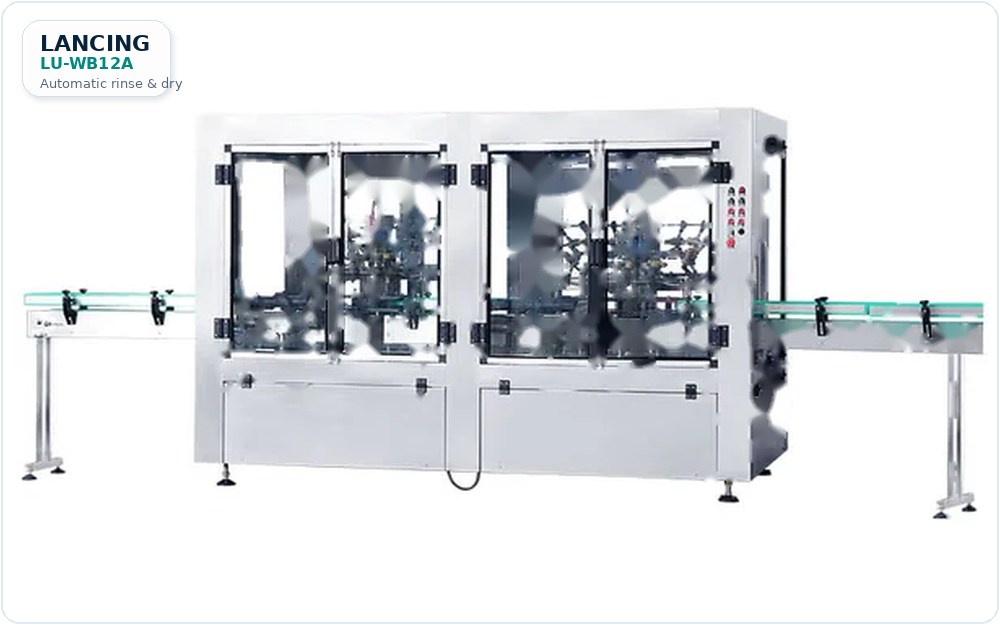 Machine
Inline routes for higher-output bottle preparation.
Explore route →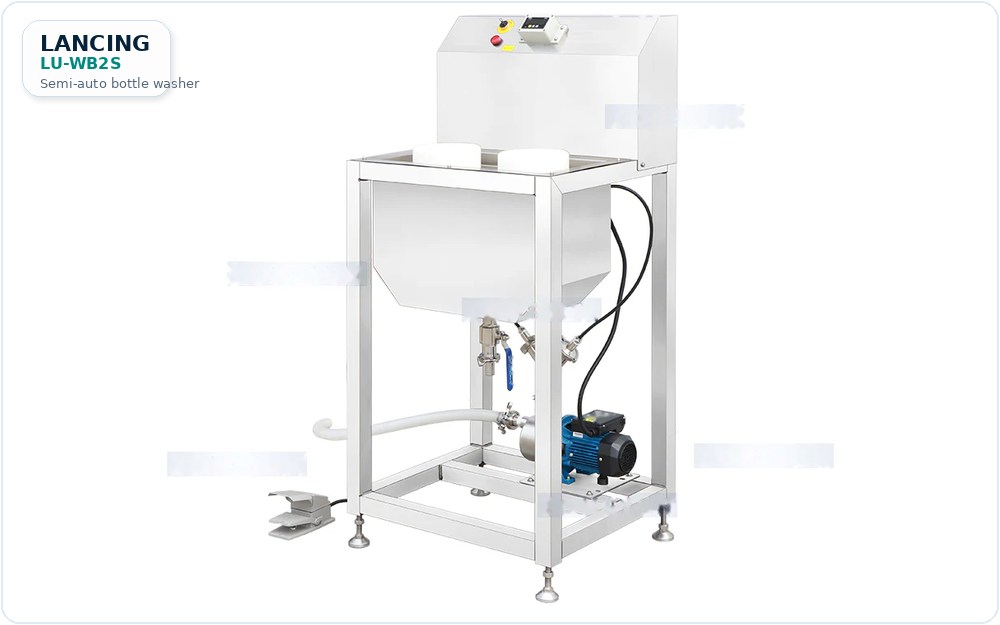 Machine
Compact and operator-fed routes for flexible production.
Explore route →Often yes, if there is space and the conveyor, utilities, guarding and transfer points can be adapted.
Line layout, conveyor height, bottle dimensions, target speed, utility details and downstream equipment are needed.
It can, but shaped bottles must be checked for stability and repeatable presentation.