
 Comparison
Air rinser vs water rinser
Compare dry air rinsing and wet bottle washing routes.
Explore route →Use ionised air where dry bottles hold dust or particles because of static charge.
PET and other plastic containers can hold light particles because of static. Standard air alone may not release the contamination reliably.
Ionised air nozzles are used to neutralise static while air flow removes particles. Extraction may be used to capture debris after it is released.
Performance depends on bottle presentation, nozzle angle, dwell time and the route used to invert or expose the container opening.
Compressed air quality, pressure, flow and maintenance access should be checked before specifying an ionised air rinser.
Comparison
Compare dry air rinsing and wet bottle washing routes.
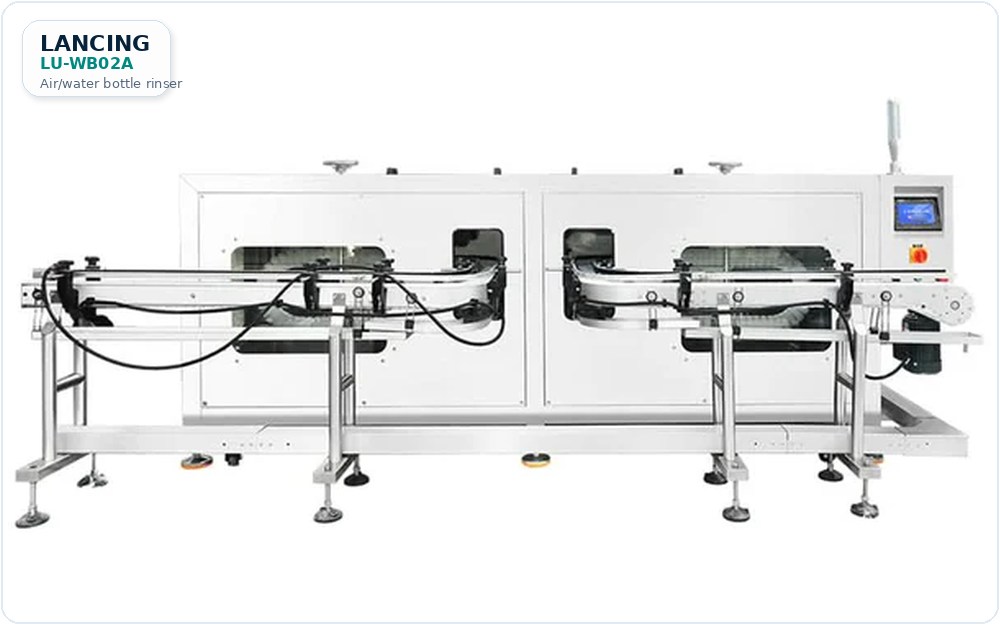
Explore route →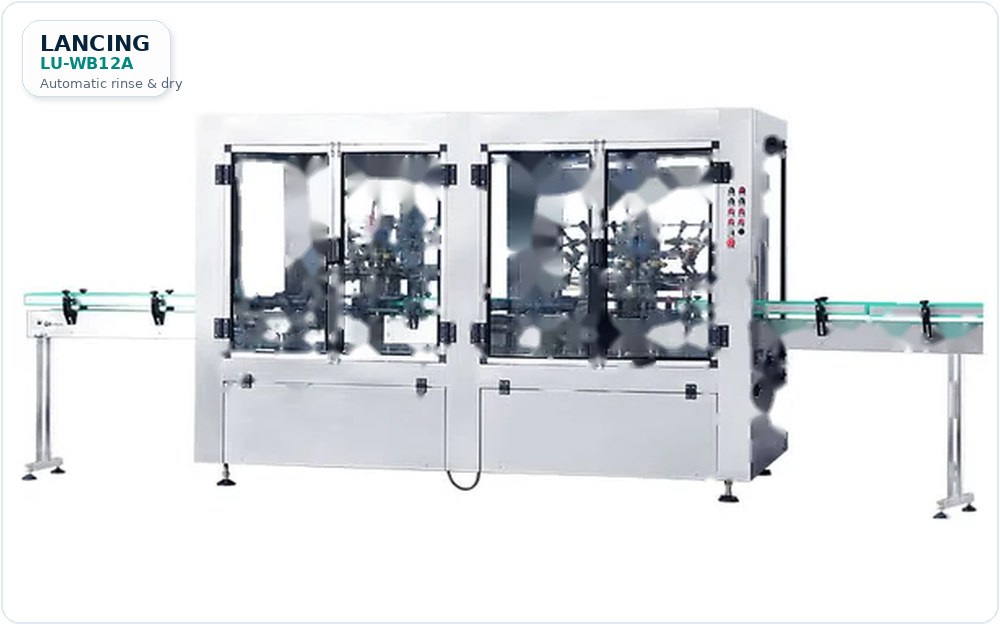 Machine
Inline routes for higher-output bottle preparation.
Explore route →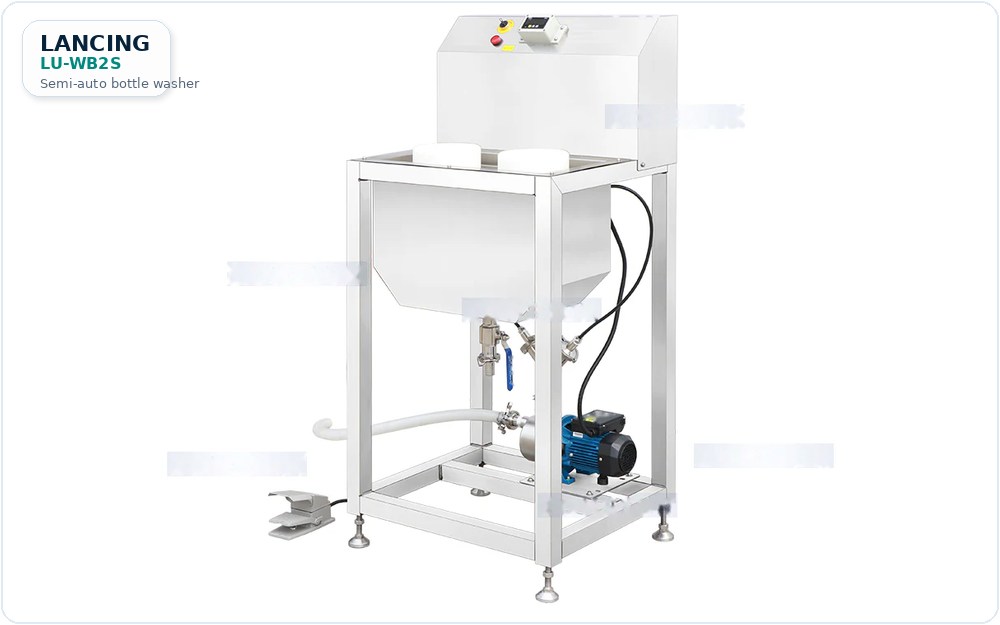 Machine
Compact and operator-fed routes for flexible production.
Explore route →Consider ionised air where dry plastic bottles attract dust or particles that are difficult to remove with ordinary air.
No. It is a dry rinsing route, but it still needs suitable compressed air and sometimes extraction.
It may be used where static or dust is a problem, but the best route depends on the contamination and bottle handling requirements.