
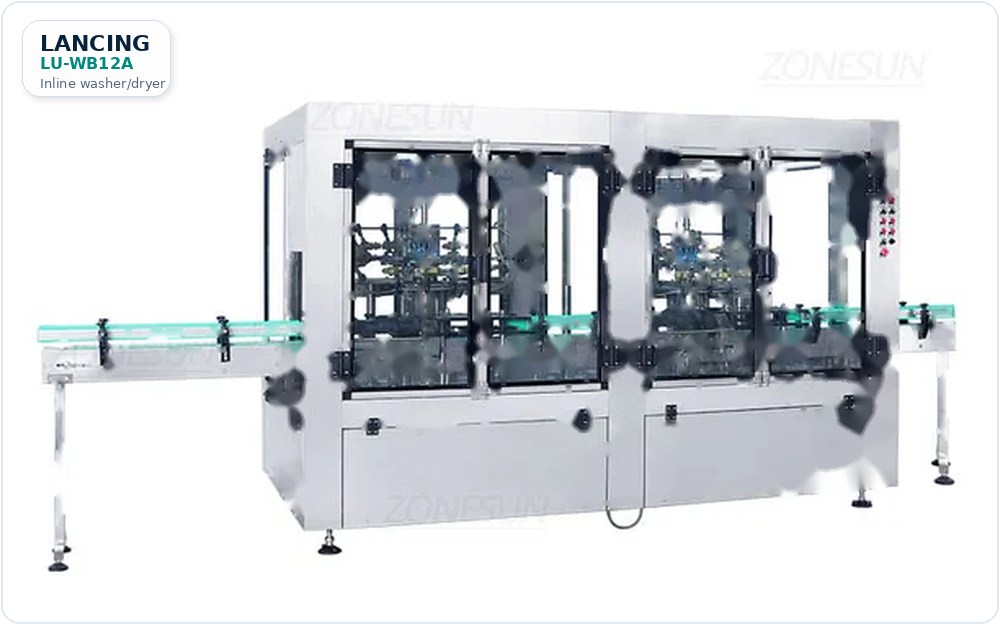
 Application
Food and beverage bottle rinsers
Bottle rinsing machinery for beverage and food lines.
Explore route →Compare air rinsing, water washing and rotary bottle washing routes for wine bottle preparation before filling and closure.
Wine bottles can be affected by dust, packaging debris and storage conditions before filling. A rinser gives a defined preparation point immediately before the filler.
The bottle neck, punt, height and base stability influence whether the bottle can be inverted or transferred through a rotary or inline rinser.
Downstream labelling and carton packing may be sensitive to residual water. If a wet wash is selected, drying and drainage should be specified at the same time.
Confirm bottle dimensions, target speed, utility availability and line layout before choosing an automatic, semi-automatic or rotary system.
Application
Bottle rinsing machinery for beverage and food lines.
Explore route →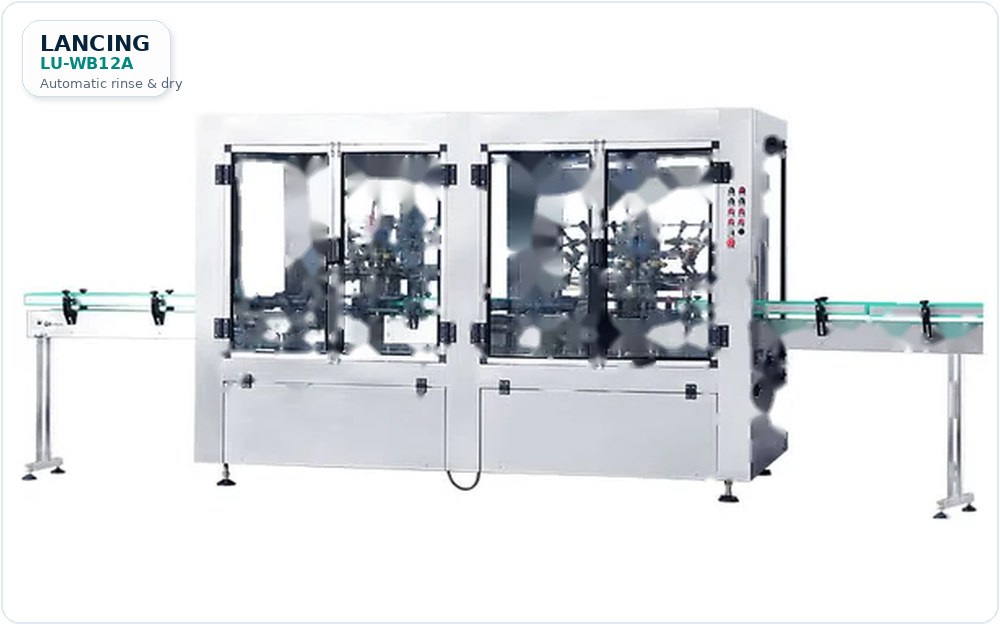 Machine
Inline routes for higher-output bottle preparation.
Explore route →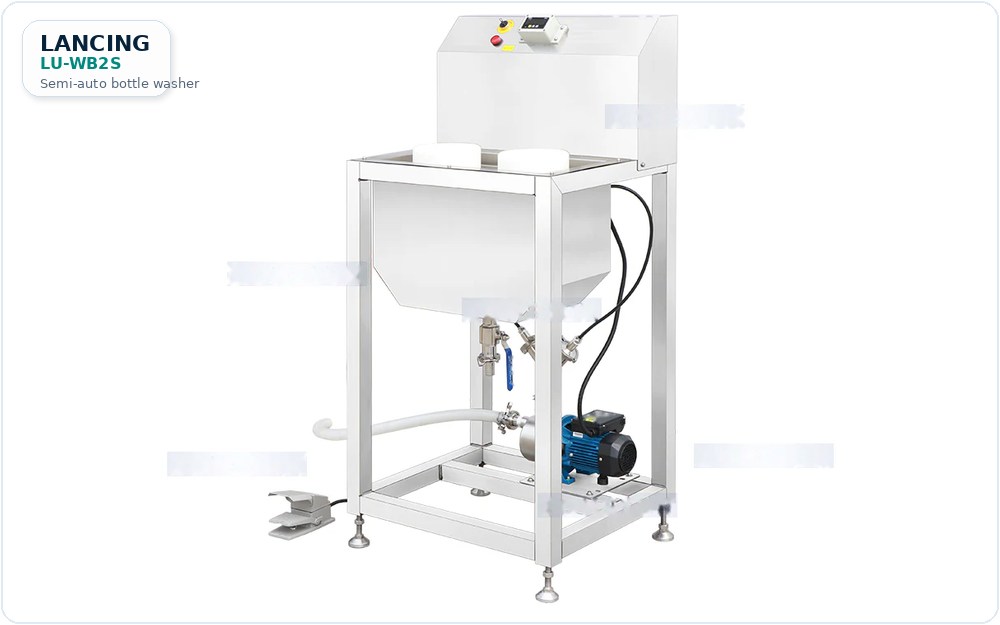 Machine
Compact and operator-fed routes for flexible production.
Explore route →Wine bottle projects commonly compare air rinsers, rotary bottle washers and inline water rinsing systems, depending on cleanliness target and output.
It may be possible, but changes in bottle height, diameter and neck finish can require adjustments or change parts.
A dryer may be needed where residual moisture affects filling, labelling, coding or packing.
An air or water rinse addresses the agreed bottle condition; a gas sparge addresses the bottle atmosphere before filling. If both are required, the bottle must remain correctly presented and protected through drain or dry time, purge and filler transfer.
Send the bottle neck finish, glass profile, contamination concern, purge objective, filler arrangement and timing. Use the rinser-versus-sparger comparison before requesting a machine route.