
 Application
Food and beverage bottle rinsers
Bottle rinsing machinery for beverage and food lines.
Explore route →Plan bottle rinsing and bottle washing equipment for gin, whisky, vodka, rum and premium spirits filling lines.
Distillery bottles often arrive clean but may still carry dust, transit debris or particles from storage. The right bottle rinser gives a controlled preparation step before filling without slowing the line or marking premium glass.
Air rinsing is normally considered for dry bottles with light contamination. Water rinsing or bottle washing is considered when a wet internal rinse is needed. Rinse-dry systems are useful where bottles must be dry before filling, capping or labelling.
Spirits projects frequently use multiple glass bottle shapes, closures and labels. Check bottle height, base stability, neck diameter and change parts before specifying a rinser.
The rinser should be specified around the filler speed, conveyor height, accumulation, capper interface and operator access so the front of the line remains stable.
Application
Bottle rinsing machinery for beverage and food lines.
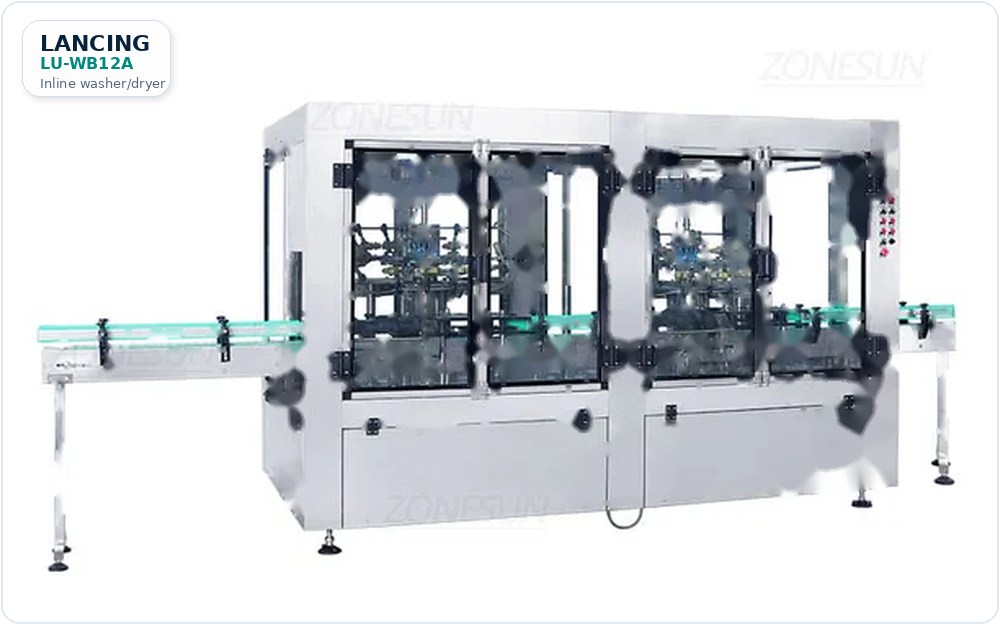
Explore route →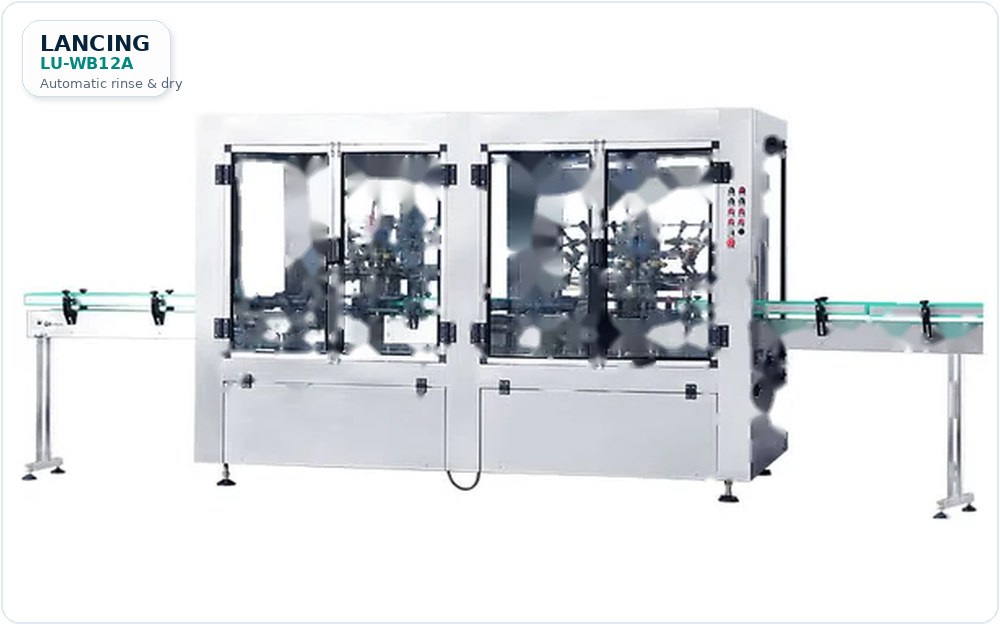 Machine
Inline routes for higher-output bottle preparation.
Explore route →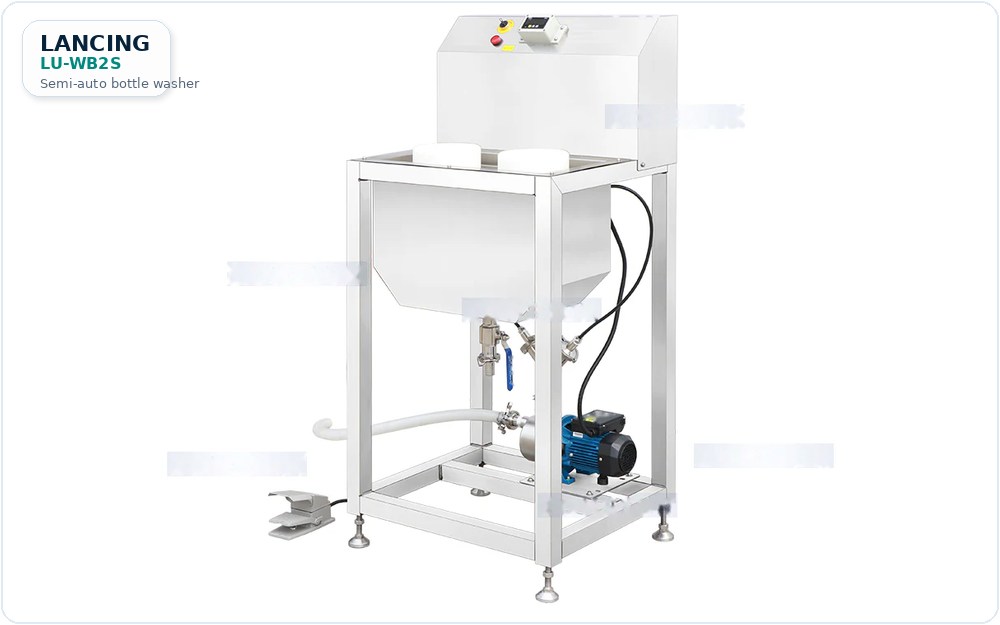 Machine
Compact and operator-fed routes for flexible production.
Explore route →The correct route depends on bottle shape, cleaning requirement and target speed. Glass spirits lines often compare air rinsing, water washing and rotary bottle washing routes.
Often yes, but the range depends on bottle height, body diameter, base stability, neck opening and the change parts or adjustments required.
Many spirit lines need dry bottles before filling or labelling, so drying time, clean air and drainage should be checked early.
Dust removal, water rinsing, drainage and residual moisture are bottle-cleanliness questions. A nitrogen, carbon-dioxide or other approved gas purge is a separate atmosphere-control question. Treating them as one undefined “blow” step makes the quotation and acceptance test ambiguous.
For premium glass and varied formats, include the neck finish, shoulder shape, base stability, rinse objective, purge objective and filler/capper sequence. See bottle rinsing versus gas sparging.