
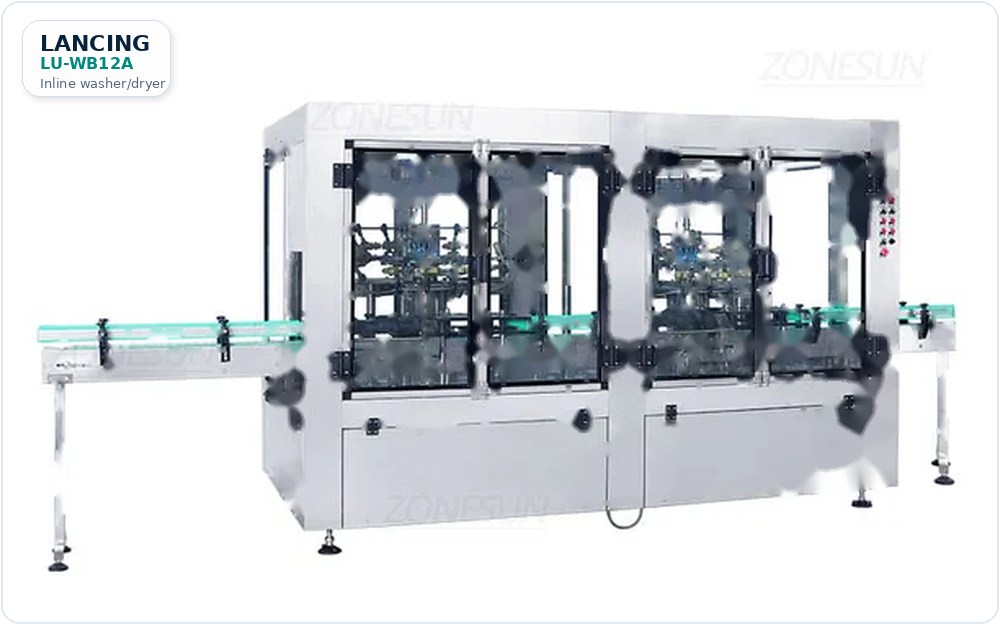
 Application
Food and beverage bottle rinsers
Bottle rinsing machinery for beverage and food lines.
Explore route →Specify bottle rinsing equipment for beer, cider, soft drinks and craft beverage production before filling, capping and labelling.
Bottle rinsing can help remove dust and loose particles before the filler. Breweries should define whether the requirement is a dry air rinse, wet wash or more intensive bottle washing route.
Round glass beer bottles are generally stable, but the neck finish, body diameter and line speed still affect the transfer method and nozzle positioning.
Wet rinsing needs water supply, filtration, drainage and splash control. For dry air rinsing, confirm the proposed air source, suitable air quality and the required flow at the rinser.
The rinser should be matched to the filler, crowner, capper, labeller and accumulation so bottle flow stays consistent.
Application
Bottle rinsing machinery for beverage and food lines.
Explore route →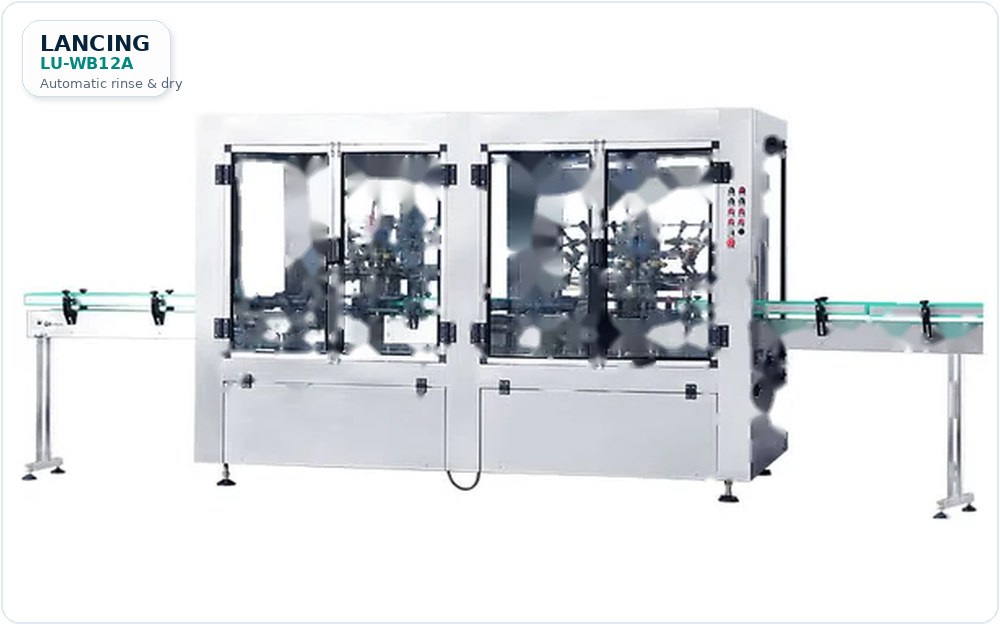 Machine
Inline routes for higher-output bottle preparation.
Explore route →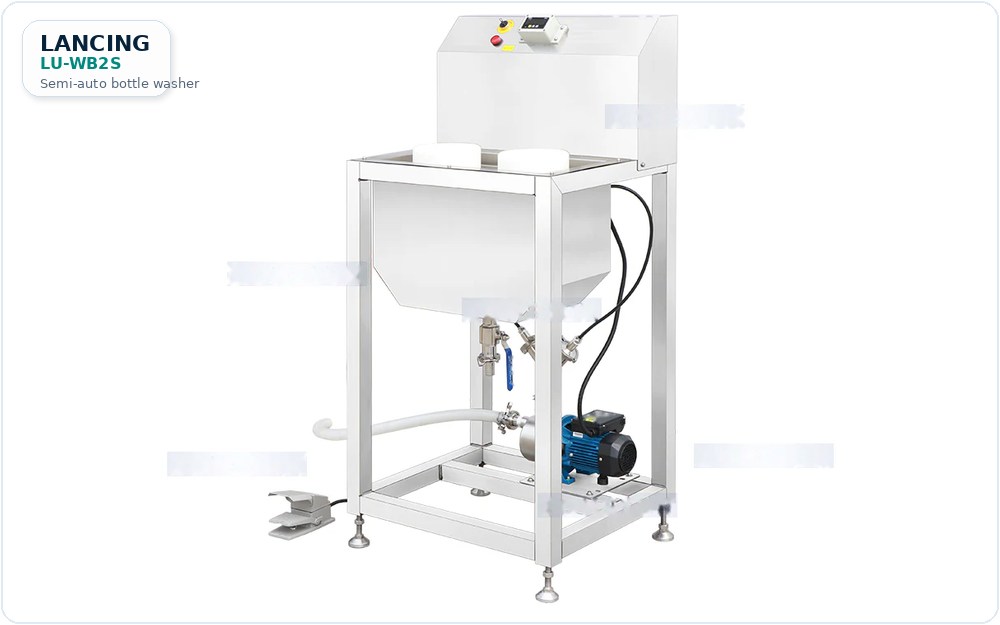 Machine
Compact and operator-fed routes for flexible production.
Explore route →It depends on the bottle condition and process requirement. Dry air rinsing suits light debris; water washing is used where a wet internal rinse is required.
Often yes, provided conveyor height, speed, transfer points, drainage and operator access are reviewed.
Bottle dimensions, bottle material, target output, rinse method, utility availability and layout drawings are the main details.
Rinsing is used to address a defined bottle contamination or residue. Sparging with an approved gas is used to change the bottle atmosphere before filling. The process brief should state whether the target is loose-particle removal, wet rinsing, residual-moisture control, oxygen displacement or a combination.
For a combined sequence, validate the bottle after rinsing, control drainage or drying, then record the purge exposure and transfer time to the filler. See the bottle rinser versus sparger guide.