
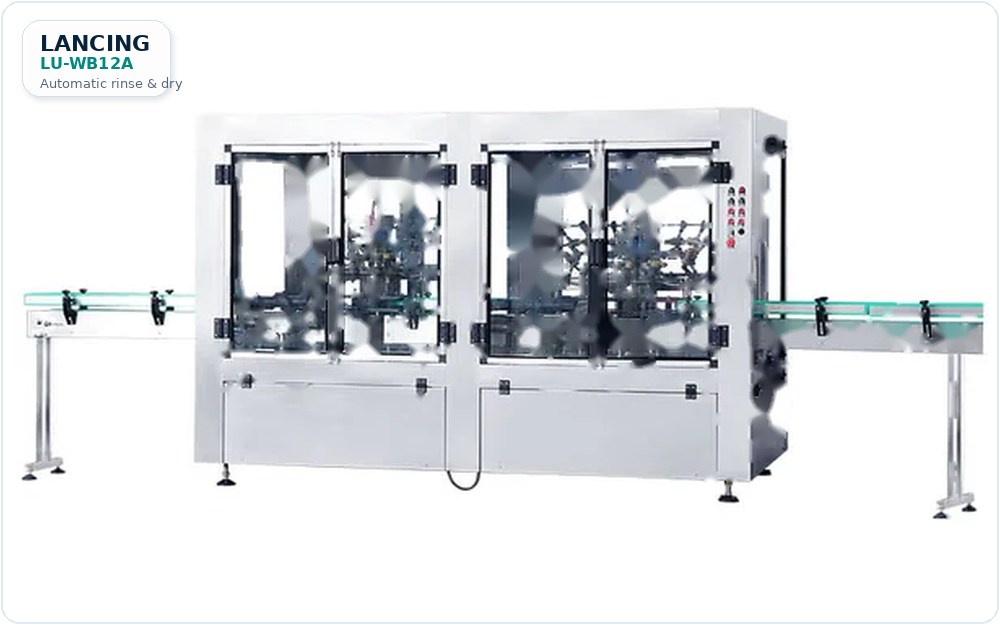
 Machine
Bottle rinsing machines
Compare automatic, semi-automatic, air, water and rinse-dry machinery routes.
Explore route →Bottle samples help prove handling, nozzle access and changeover requirements before equipment is ordered.

Photos and drawings are useful, but real containers reveal stability, wall strength, neck access and guide requirements.
Send representative samples of each bottle size, including caps or closures if they affect line layout.
Handling, inversion, air or water coverage, drain behaviour and transfer to the conveyor should be reviewed.
Test notes and photographs help compare routes and support a clearer quotation.
Machine
Compare automatic, semi-automatic, air, water and rinse-dry machinery routes.
Explore route →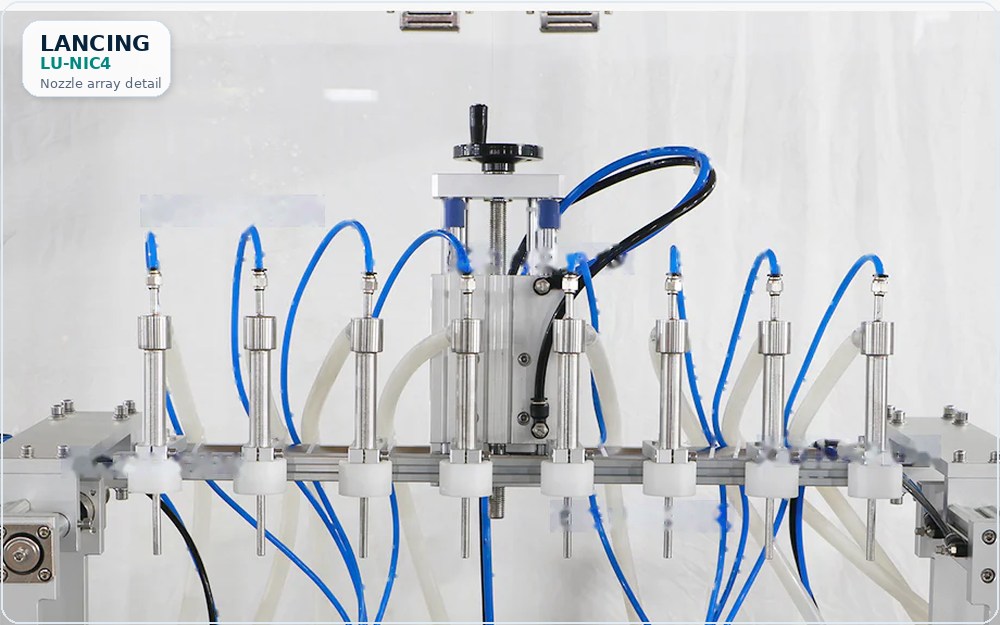 Guide
Compare dry air and wet water rinsing before choosing a route.
Explore route → Guide
Information to collect before requesting a bottle rinser quotation.
Explore route →Early checks reduce the chance of buying equipment that cannot handle the bottle format, target output or line layout once installation starts.
Send bottle photos or samples, drawings if available, material, capacity, height, diameter, neck finish, target speed and a short description of the filling line.
Yes. A practical shortlist can normally be prepared once bottle details, utilities and the required rinse process are understood.
Give each bottle variant a simple reference and retain that reference in photographs, notes and results. Include ordinary production samples alongside the formats expected to be most difficult. Record what has actually been evaluated so an untested bottle introduced later is not assumed to share the same result.
Separate observations into handling, rinse coverage, drainage and transfer. If a trial needs manual intervention, note when it occurred and why. This produces a more useful record than a short video of successful bottles alone and helps clarify which adjustments or additional checks belong in the final proposal.
Identify the substitute and its differences explicitly. Treat any conclusion that depends on the real bottle as provisional until that format has been assessed.