
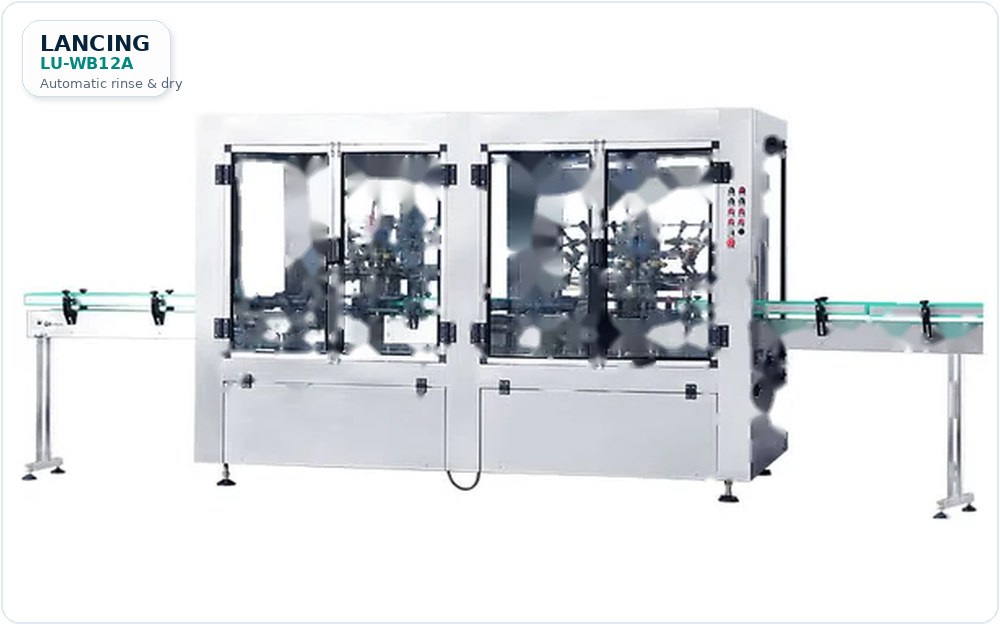
 Machine
Bottle rinsing machines
Compare automatic, semi-automatic, air, water and rinse-dry machinery routes.
Explore route →Comparison guide for dry air rinsing, water washing and rinse-dry bottle preparation.
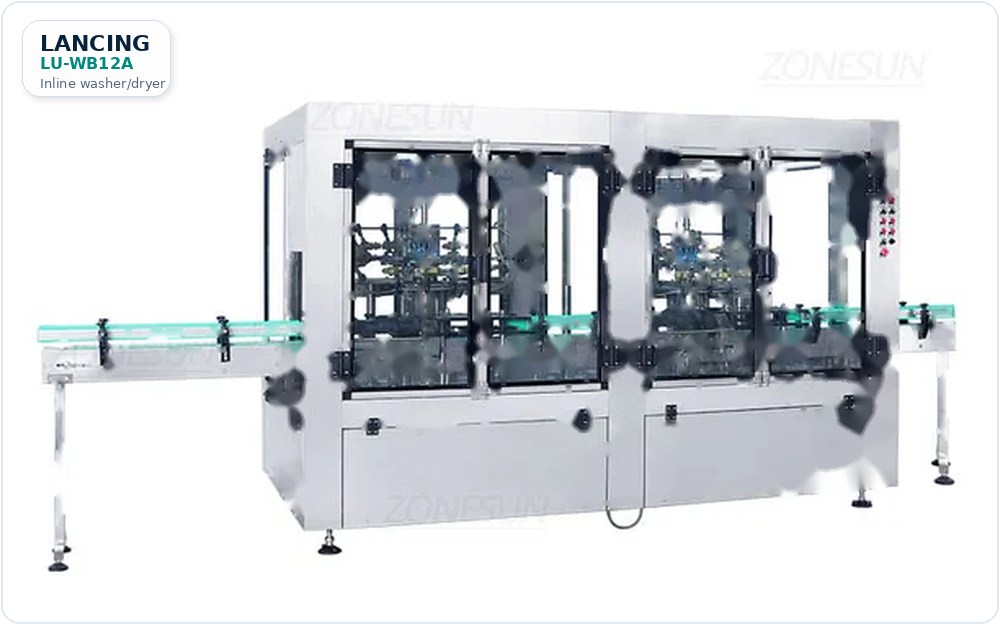
Dry air rinsing can be assessed for loose particles where wetting is undesirable; a wet rinse introduces water-quality, drainage and residual-moisture checks. Compare both routes using the same representative bottles and the condition required at the next process, as set out in the selection guide.
Before comparing quotations, confirm the bottle size range, material, stability, whether the container can be inverted, and whether bottles must stay dry before filling or labelling.
Most problems appear when the rinser is selected before the line layout, filler speed, transfer heights and utilities have been checked.
Compare air rinsers, water washers, rinse-dry machines and semi-automatic routes against the actual bottle and site conditions rather than only against headline machine speed.
Prepare bottle photos, line photographs, target output and a short process description so Lancing can suggest a practical route.
Machine
Compare automatic, semi-automatic, air, water and rinse-dry machinery routes.
Explore route →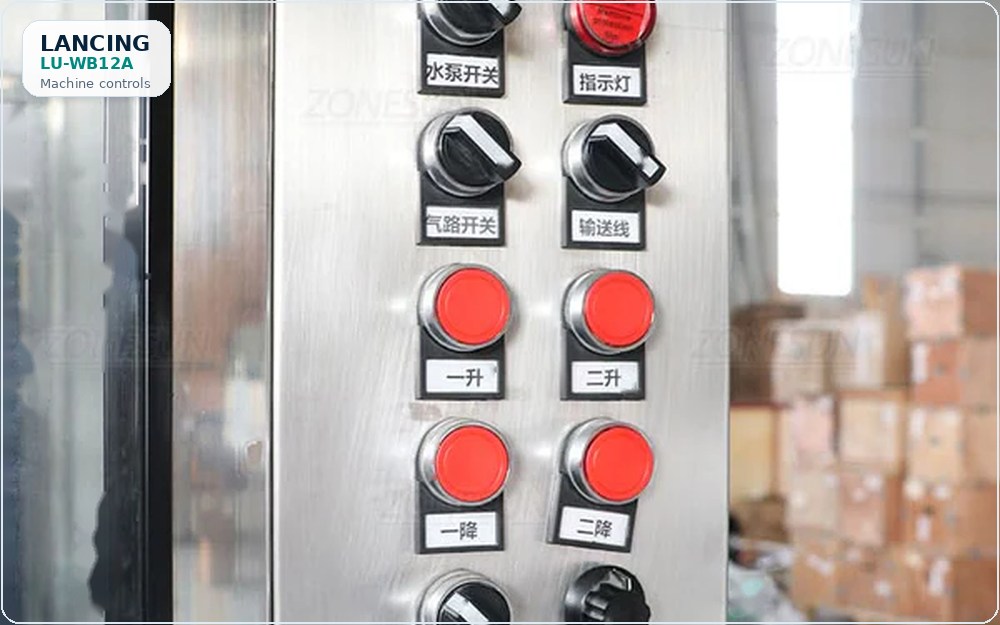 Guide
Guide
Information to collect before requesting a bottle rinser quotation.
Explore route →
Quote
Send bottle details, output target and line photographs for a practical shortlist.
Explore route →The main decision is whether the container needs dry air cleaning, wet rinsing, a rinse-dry process or a simpler semi-automatic route.
Samples reveal stability, neck access, inversion risk, guide rail requirements and whether the bottle can transfer reliably through the rinsing stage.
Yes. A preliminary shortlist can normally be prepared from bottle dimensions, target speed, rinse requirement and line photos.