
 Related
Bottle rinsing machine UK
Compare the main machine routes for UK projects.
Explore route →Detergent bottle rinser guidance for household, cleaning and chemical bottle filling lines before filling and capping.
For detergent and cleaning-liquid lines, match the incoming bottle condition to an air, water or wash-dry route. Include bottle material, shape and stability, plus any dryness requirement before filling or labelling.
Typical formats include detergent bottles, cleaner bottles and household chemical containers. These packs can need a dry air rinse, an internal water wash, external cleaning or a wash-dry process depending on how the container is supplied and what happens immediately before filling.
Before comparing machines, record bottle height, diameter, neck opening, material, stability and whether the pack is round, square, oval or shaped. For detergent and cleaning liquid producers, it is also worth checking whether the line will run one product continuously or several shorter batches during the week.
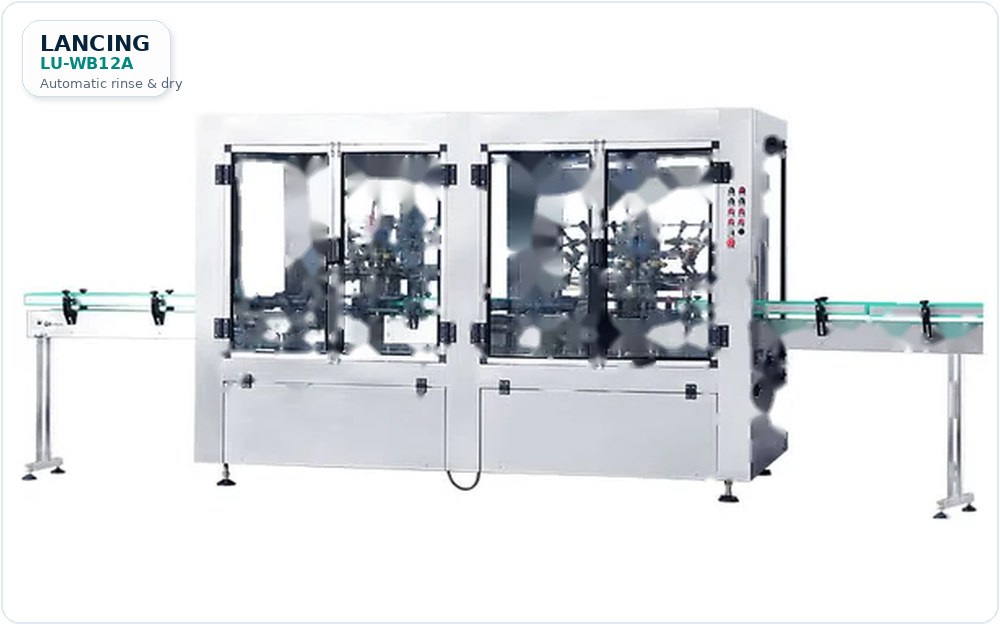
The likely starting point is air rinse, water wash or external clean. Air rinsing is usually considered where loose dust or particles must be removed without adding water. Water rinsing and bottle washing are considered when a wet internal rinse or more active wash is needed. Rinse-dry systems are considered when the bottle must be dry before the next process.
The safest way to avoid under-specifying the machine is to send bottle samples, line speed and photos of the existing filling equipment. That makes it easier to check if a compact semi-automatic rinser, inline automatic rinser, rotary washer or rinse-dry machine is the best route.
For detergent bottle rinsers, the quote will be more useful when the enquiry includes the product type, bottle material, bottle dimensions, cap or closure style, and downstream equipment. A simple sketch of the line layout also helps identify conveyor, accumulation and operator access issues before the machine is selected.
These checks help match the rinser to the bottle, line speed and filling environment.
| Check | Why it matters | Send with enquiry |
|---|---|---|
| Bottle format | Shape, weight and neck finish affect stability, access and change parts. | Photos, drawings or samples |
| Rinse method | Air, water and rinse-dry routes need different utilities and machine layouts. | Cleaning requirement and contamination risk |
| Output target | The rinser must keep pace with the filler without starving or flooding the line. | Bottles/minute or bottles/hour |
| Integration | Conveyor height, space and downstream transfer can decide the practical route. | Line photos or layout sketch |
RelatedCompare the main machine routes for UK projects.
Explore route →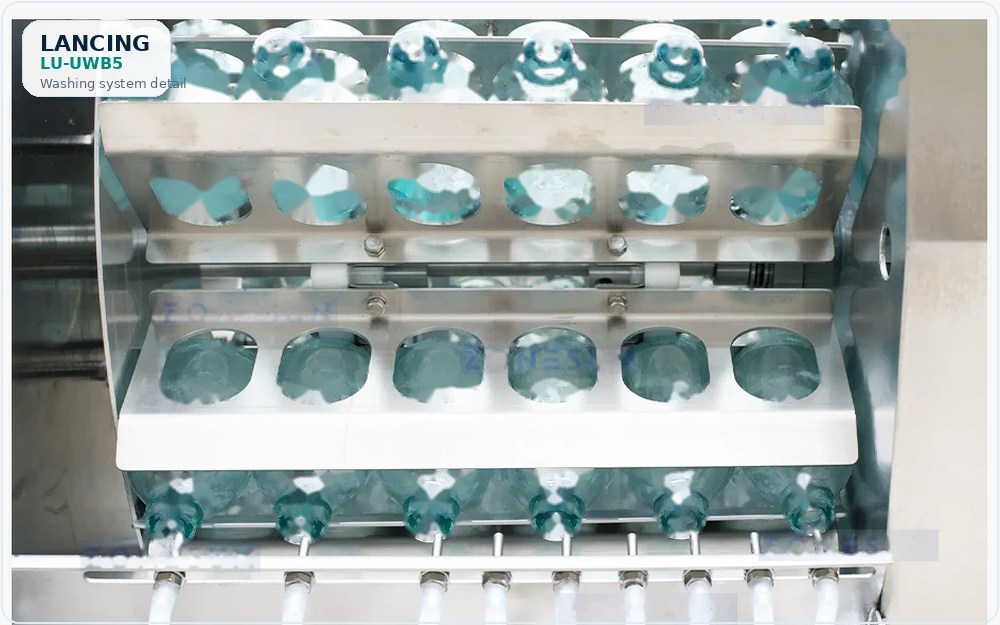 Related
Check which cleaning route fits the application.
Explore route → Related
Send bottle and line details to Lancing.
Explore route →The right route depends on the bottle material, contamination risk and whether the container must remain dry. Projects using detergent, cleaner or other household chemical bottles often start with an air-rinse or water-rinse comparison.
Useful details include bottle dimensions, bottle material, neck finish, target output, rinse method, available utilities and the equipment immediately downstream.
Often yes, but the practical range depends on bottle stability, height, diameter, neck opening, guides, change parts and the time available for changeover.